


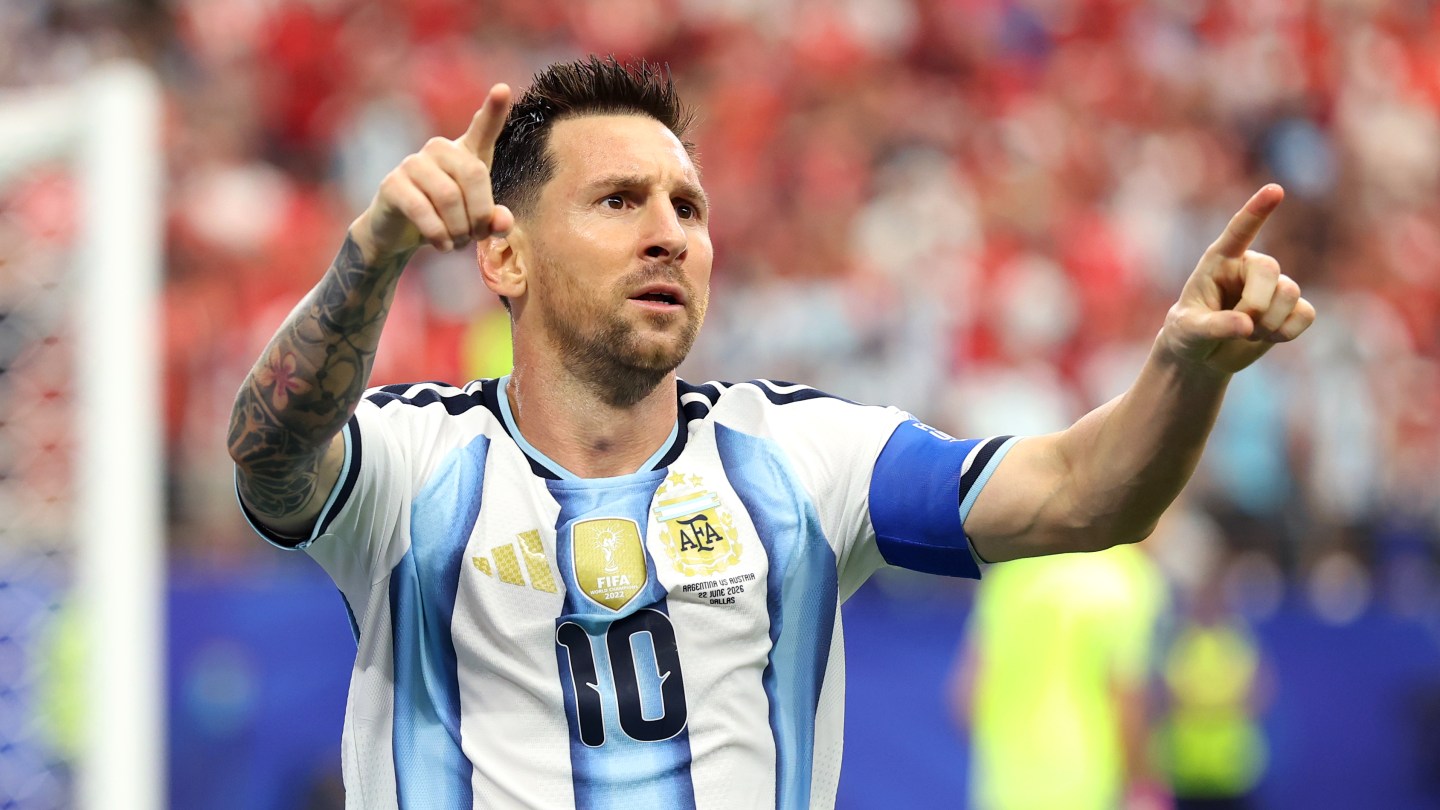
What is the value of a World Cup water break?
For fans and players, they’re not worth much at all, and have engendered complaints they break up the flow of the game and topple decades of strategy.
But for Fox Sports, the company airing the tournament in the U.S., the dollar figures loom larger than Lionel Messi lining up for a penalty kick: At least $250 million, with a plausible value of $500 million-600 million.
Yes, that’s how much the company is likely to collect from advertisers for those sneaked-in ads from the likes of Nike, Adidas, Coke and Lenovo. A media-buyer source tells The Hollywood Reporter that the average cost of a 30-second spot during the soccer extravaganza is between $200,000 and $750,000, depending on a match’s participants (i.e. is the U.S. playing?) and the stage of the tournament (knockout stages amp up the interest).
With six minutes of hydration breaks, that adds up to anywhere between $2.5 million and $9 million per game. Multiplied by the 104 games played and of course factoring in that most buyers are buying packages that can run into the tens of millions of dollars, not single spots, this puts a plausible total above $500 million.
Fox paid less than that for the entire rights to the tournament. (The full cost for English language rights to the 2026 World Cup is believed to be between $400 million and $500 million.)
The further irony is that FIFA, which added the breaks earlier this year for the tournament as a global-soccer first, sold them as necessary because rising temperatures means players need time to stop and cool off — which, yes, means a Murdoch-owned company is making half a billion dollars thanks to climate change.
Fox has been able to charge as much for an ad because the games are being played on North American soil and thus in ideal, often primetime, windows. That has happened only once before in the past 30 years, with most World Cups in Europe or Asia and games taking place in the wee American hours.
Zac Kenworthy, VP of production for Fox Sports, told THR that the time zones were a “game changer” for the network’s coverage, allowing them to do more storytelling around the game to drive viewers to the action in prime viewing windows.
“We know that these opportunities are going to be there, people are going to be home from work, they’re going to be watching the game in communities together, and for us it’s finding ways to do some storytelling around that,” he says.
Paired with a compelling American team, and huge international stars like Lionel Messi and Erling Haaland getting prominent placement, it is a recipe for a windfall.
The U.S. team’s Friday afternoon victory over Australia delivered nearly 15 million viewers, and even the opening match between Mexico and South Africa delivered over seven million viewers for Fox. The additional 40 games don’t hurt either (a function of the tournament expanding from 32 to 48 teams and adding a knockout round).
Fox and its coverage team has also sought to create a pervasive sense of the game even for those not actively seeking it out. “In this day and age, where so much is behind walls and we see so many clickthrough things, I want it to be ubiquitous, I want people to be able to walk downtown and see that the games are playing on in the background, and you’re flicking through, and there it is, there’s the game,” former player and longtime studio host Alexi Lalas tells THR.
Soccer has always been less appealing to broadcasters because the lack of intra-half stoppages means fewer revenue opportunities than other sports; advertising revenue instead tends to be concentrated more on in-stadium and on-uniform placements, which networks don’t share in. Broadcasters instead have to wring as much as they can from halftime sales as well as the pre- and post-game shows. But Fox now seems to have found a workaround with the hydration breaks, with an assist from FIFA.
Not all broadcasters are cashing in. Telemundo doesn’t run full-on ads during the hydration breaks, instead kicking it back to the studio, with anchors thanking sponsors for allowing them not to cut away. Telemundi’s ratings are solid, drawing millions of viewers for big matches, and a much more accessible streaming product on Peacock, but the Spanish-language rights are a trickier sell for some advertisers, a media buying source says. While the big sponsors are buying on both Fox and Telemundo, some smaller brands are choosing one or the other.
Presumably those sponsors aren’t paying half a billion dollars for the privilege.

