


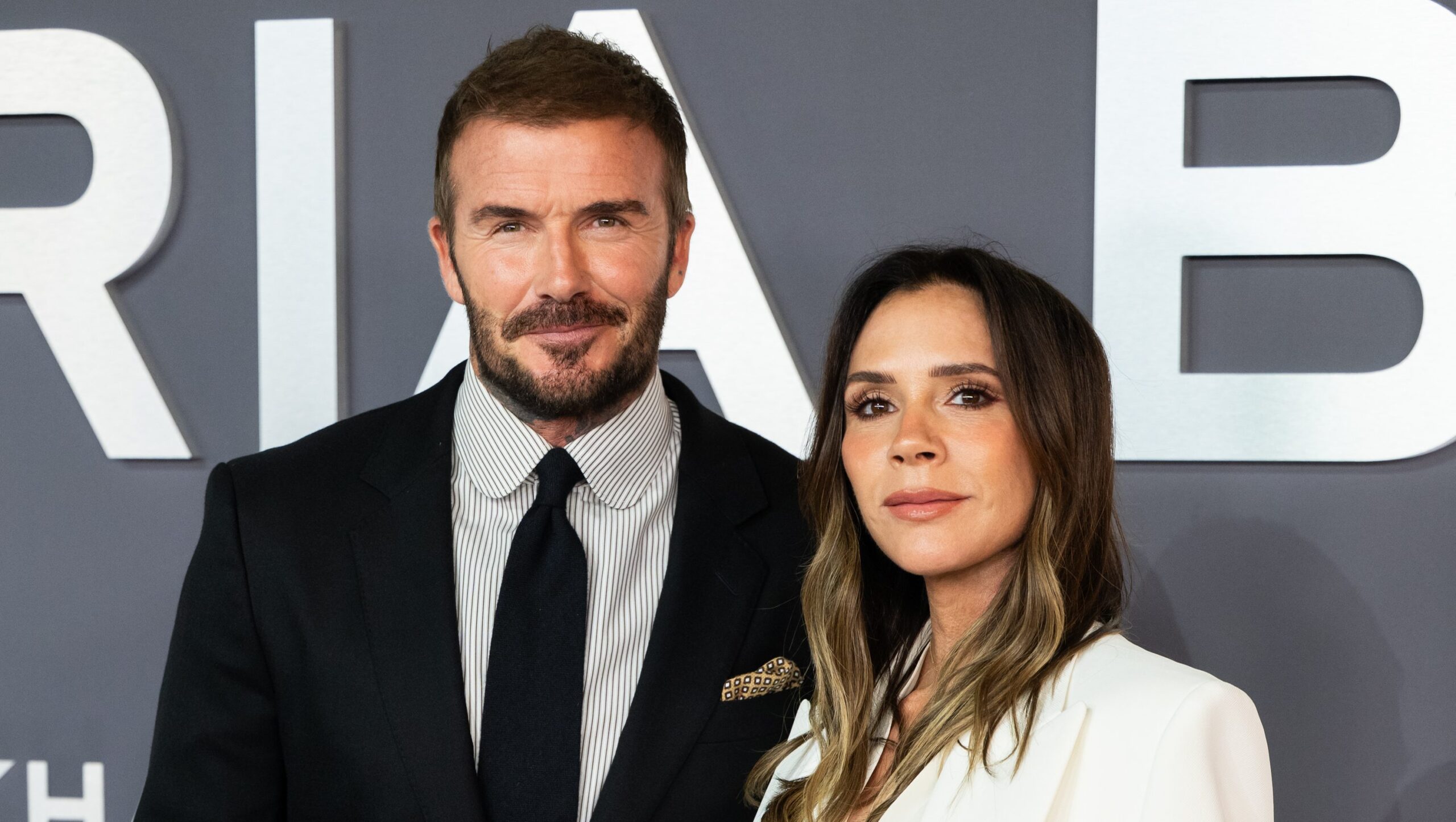


David Beckham turned 51 on Friday. Victoria leaned over at The Dorchester, planted a kiss on his cheek, and the internet did what the internet does. Half the comments crowned them couple goals. The other half started counting down to the next tabloid rumor.
Both takes are lazy. Both miss what’s actually happening in that photo.
Twenty-five years of marriage. Four kids. A goldfish bowl life where every glance gets screenshotted, archived, dissected by strangers who’ve decided they know what’s real and what’s staged. And still, a kiss on the cheek at a birthday dinner.
I’m a couples therapist. I look at that photo and I don’t see a fairytale. I see two nervous systems that have learned how to find each other again after decades of getting it wrong and getting it right and getting it wrong again.
The Goldfish Bowl Nobody Survives Cleanly
From the moment you were born, you were wired for connection. A hundred thousand years ago on the African savanna, you needed a good enough other on the other side of your birth, or you would die. That biology didn’t go anywhere. Your nervous system is still scanning your partner asking two questions on a loop. Are you there for me? Am I enough for you?
Now imagine asking those questions while every move is watched, judged, commented on, saved, shared, screenshotted, archived. That’s the Beckham operating environment. Two villages watching. Both villages voting.
Here’s the trap nobody warns high-achieving couples about. When your career is climbing, when the kids are turning out, when the brand is intact, an unconscious expectation creeps in. We should have arrived by now. How can we be this educated, this successful, this competent, and still miss each other in the kitchen?
Birthdays make this worse, not better. Anytime there’s a greater expectation that it’ll go well, that we’ll feel connected, the sensitivity to feeling injured goes up, not down. A milestone night at The Dorchester carries more emotional voltage than a Tuesday. More chance of magic. More chance of one wrong look detonating the whole thing.
So when you see a couple pull off a tender moment at a 51st birthday dinner, what you’re actually seeing is two people who managed to quiet the terrified little kids inside them long enough to make contact. Because no matter how grown up you become, you still have the heart of a baby asking, am I alone in this? Am I good enough?
Describing The Mango Versus Tasting It
Couples come into my office wanting to permanently lock in the feeling they had on their best anniversary. They want a hack. They treat the relationship like a problem to optimize.
I have to break the news. Good states are temporary. You reach them, lose them, find your way back. You don’t arrive at a good relationship and then keep it forever in a glass case. The actual work is recognizing that we get triggered, we hurt each other, we make our way back.
I tell therapists in training: you can describe a mango for an hour. Color, texture, origin, nutritional content. That’s not the same thing as tasting the mango.
A lavish dinner at The Dorchester is describing the mango. The kiss on the cheek is tasting it. Your limbic system is basically a naked mole rat. It doesn’t really see, can’t really hear, just knows touch and smell. A 25-year marriage cannot survive on optics. At some point both people have to drop the sexy public self and let the raw, unguarded self make contact.
If you’re reading this wondering whether your own relationship is stuck describing mangos, you can take our free relationship quiz and get a read on your actual pattern. It’s the conversation underneath the conversation that matters, and most couples have never named theirs.
The Beckhams have weathered cheating allegations, business pressure, four kids, public reinventions, a documentary that aired their lowest point on Netflix. They are not a couple who avoided rupture. They are a couple who kept coming back.
Volatility Is The Feature
Here’s the part that breaks people’s brains.
Disconnection is a feature, not a bug. Volatility is not a sign something is broken. Volatility is your nervous system saying we matter to each other. If you didn’t matter, there’d be nothing to fight about.
I joke with clients that if I hosted a global conference tomorrow on what’s wrong with your partner, you’d be the keynote speaker. We gorge ourselves on cataloging the other person’s flaws. Meanwhile, the actual marriage is happening somewhere else entirely.
Stop trying to never fight. You’re going to. Trying to engineer a conflict-free marriage will make you crazy, and it will make your partner lonely. The magic isn’t in the absence of friction. The magic is in how fast you give each other a chance to repair.
Long marriages develop their own private dialects of repair. A hand on the lower back. A particular look across a dinner table. A kiss on the cheek at a birthday party that says, I know how hard this year was, I’m still here, I see you. None of that gets captured in a tabloid caption. All of it is the actual marriage.
The other place this gets misread is in the bedroom. Couples assume desire should be automatic after 25 years and panic when it isn’t. Desire follows safety, and safety follows repair. If you’re stuck there, the science behind signs husband doesn t want you sexually gets at what’s actually underneath that pattern, and it’s almost never what people think.
There’s also the surveillance problem unique to couples like the Beckhams, where strangers parse every photo for signs of betrayal. If you want to understand why micro-moments of attention get weaponized, the science behind micro cheating is worth your time.
What That Kiss Actually Means
If David and Victoria were sitting on my couch, I wouldn’t ask them about logistics. I wouldn’t ask about schedules or business or the kids. That stuff solves itself once the emotional ground is solid.
I’d ask them what it costs each of them to keep choosing the other one in public when private life has been hard. I’d ask what they’ve forgiven that nobody knows about. I’d ask what they’re still scared the other one secretly thinks of them.
Love is proof of work. It is not a feeling you have. It is the work you do. The Beckhams are a very public example of two people doing the gritty, unglamorous proof of work required to rebuild the ground they stand on, one brick of truth, one brick of repair at a time.
That kiss at The Dorchester wasn’t a performance and it wasn’t a fairytale. It was a receipt.
Twenty-five years of small returns. Twenty-five years of finding each other after losing each other. The cheek is a quieter place than the mouth. It’s the place you kiss someone when you’ve already said everything that needs saying, and you’re just confirming the contract one more time.
That’s not couple goals. That’s something harder, and better, and available to anyone willing to keep coming back.
______________________________________________________________________________________
Couples therapist Figs O’Sullivan is a couples therapist and relationship expert to the Stars and Silicon Valley, founder of Empathi, and built Figlet, our AI relationship coach, an AI relationship coach trained on his clinical work.

