


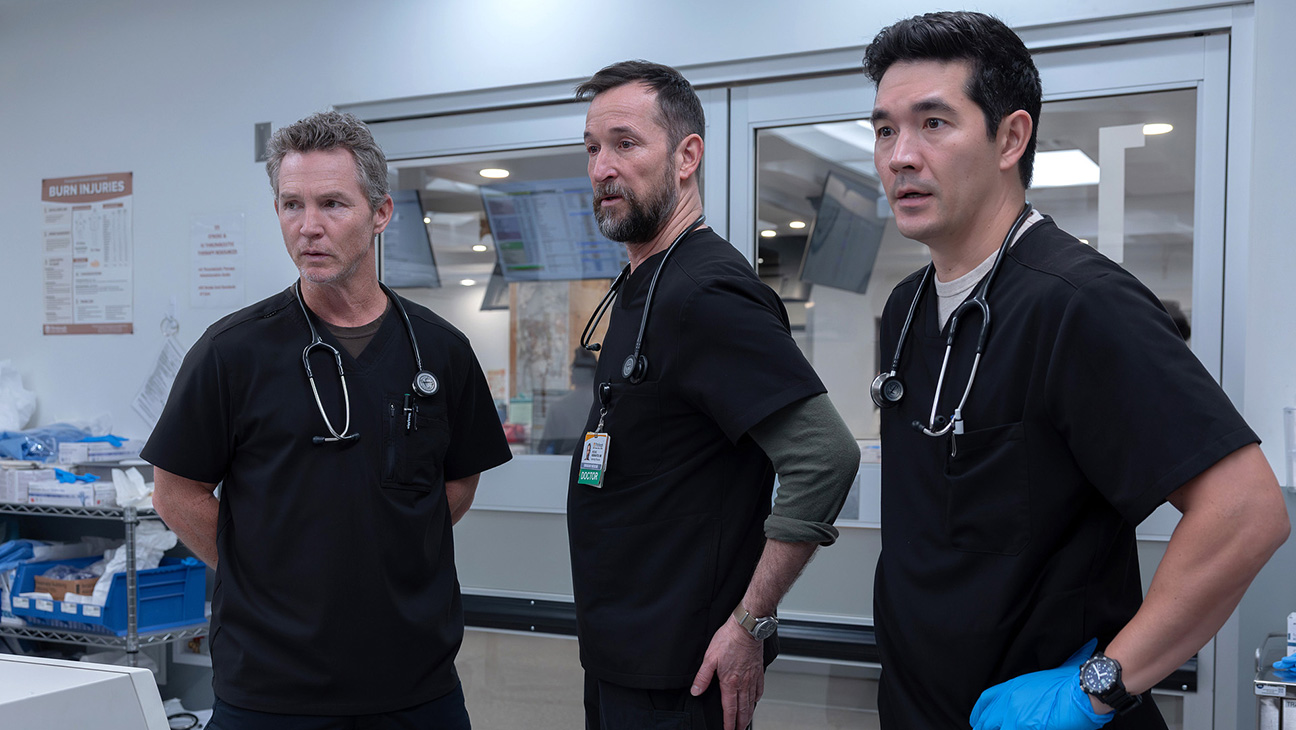
The Pitt‘s freshman season garnered a staggering 13 Emmy nominations last year (winning five, including outstanding drama series), but it was topped this year by its sophomore outing with a whopping 25 nods, the most of any show in any category.
That even shocked showrunner and creator R. Scott Gemmill, who calls the number of nods “almost embarrassing,” but “wonderful.”
Gemmill talks with THR about the word cloud they used for season two, foreshadowing a storyline that never happened and what challenges the sophomore run threw his way.
Do this year’s nominations feel any different from last year’s?
The first season was weird because we wrote and produced the whole season without an airdate. We were done shooting and had gotten no feedback whatsoever on the show, and so we didn’t really know if anyone was going to even watch it. The first season, getting those nominations, that was a huge surprise, and it was validating and exciting. This season, to be honest, I just hoped we wouldn’t get snubbed, and it was like, “They were a one-off, and they had one good season,” so the fact that we got so much recognition was just beyond what you can expect.
When you all sat down to write season two, what were some aspirations for it?
It’s always been focused on Dr. “Robby” Robinavitch [played by Noah Wyle]. We took him to a breaking point in the first season, and that was sort of our North Star. How does he bounce back from that? What is Robby’s road to recovery? Is he going to acknowledge it, embrace it or is he going to fight it? Mental health became a big part, and continues to be a big part, of Robby’s journey, but also because it’s such a huge component of health care these days and such a big aspect of the emergency department care. That’s really been a focus for us this season.
Throughout the season, there seems to be foreshadowing that something bad might happen to Robby. Did you ever consider him actually getting into a motorcycle accident?
We certainly allow ourselves the ability to go in directions that we might not have originally considered. Like I said, I tend to hold on loosely so that when things like that present themselves, you’re open-minded enough to explore them. We try to allow ourselves a little bit of wiggle room to explore all those possibilities. At one point, there was talk about, “Does he have a bad accident? Does he have a near-death experience?” There’s an element of that which comes in into season three, that Robby is sort of privy to or witness to, but it’s not necessarily about him. But it does impact his trajectory.
What was a challenge you faced on season two that you didn’t have in season one?
In season one, you had the novelty of the show. People didn’t know what to expect. You could surprise them. There were no expectations. Season two had a couple of challenges. One is, whatever you put into play in the first season, now you’re stuck with. And it might have seemed like a great idea at the time, like, “Oh well, it’ll be fine. We’ll figure it out next season.” Then, I think the expectations: The show just got so much recognition and notoriety; that put us under the microscope a little bit and having to prove that it wasn’t just a fluke. I trusted what we did because we did it without any real expectations, other than just trying to tell really good stories about health care workers and what they face, and we just tried to be truthful to that. There are always going to be great stories and social issues that come through the emergency department that are worth telling.
This story first appeared in an August stand-alone issue of The Hollywood Reporter magazine. To receive the magazine, click here to subscribe.

