


At this year’s Zurich Summit, filmmakers and industry executives warned that political polarization and attacks on free expression are reshaping the landscape for cinema, with artists facing new forms of pressure from governments, media, and online campaigns.
Nathanaël Karmitz, chairman of French distributor and exhibitor mk2, whose slate includes Kleber Mendonça Filho’s Brazil-set political drama The Secret Agent and Jafar Panahi’s Palme d’Or winner A Simple Accident, argued that the link between politics and cinema is long-standing but has entered a new phase. “Culture is under attack and cinema is under attack everywhere,” he said. “We have less and less press talking about movies, but now we have far-right Twitter accounts that attack systematically everything about movies and French movies. In terms of audience, it’s the major voice we hear on Twitter. Is this a problem? Yes, it is.”
Karmitz said mk2 had recently decided to confront such criticism directly rather than ignore it. “Audiences are fragmented, so you have to take a position, and you have to position yourself, your company, without fearing the consequence, because otherwise you’re nowhere,” he noted, pointing to recent attempts by right-wing politicians in France to dismantle France’s CNC film funding body and privatize public television. “This is a very fragile ecosystem. It’s under attack everywhere because these are the first steps to illiberal systems. But I’m an optimist. I believe in people, in companies, in artists to get themselves up and fight back.”
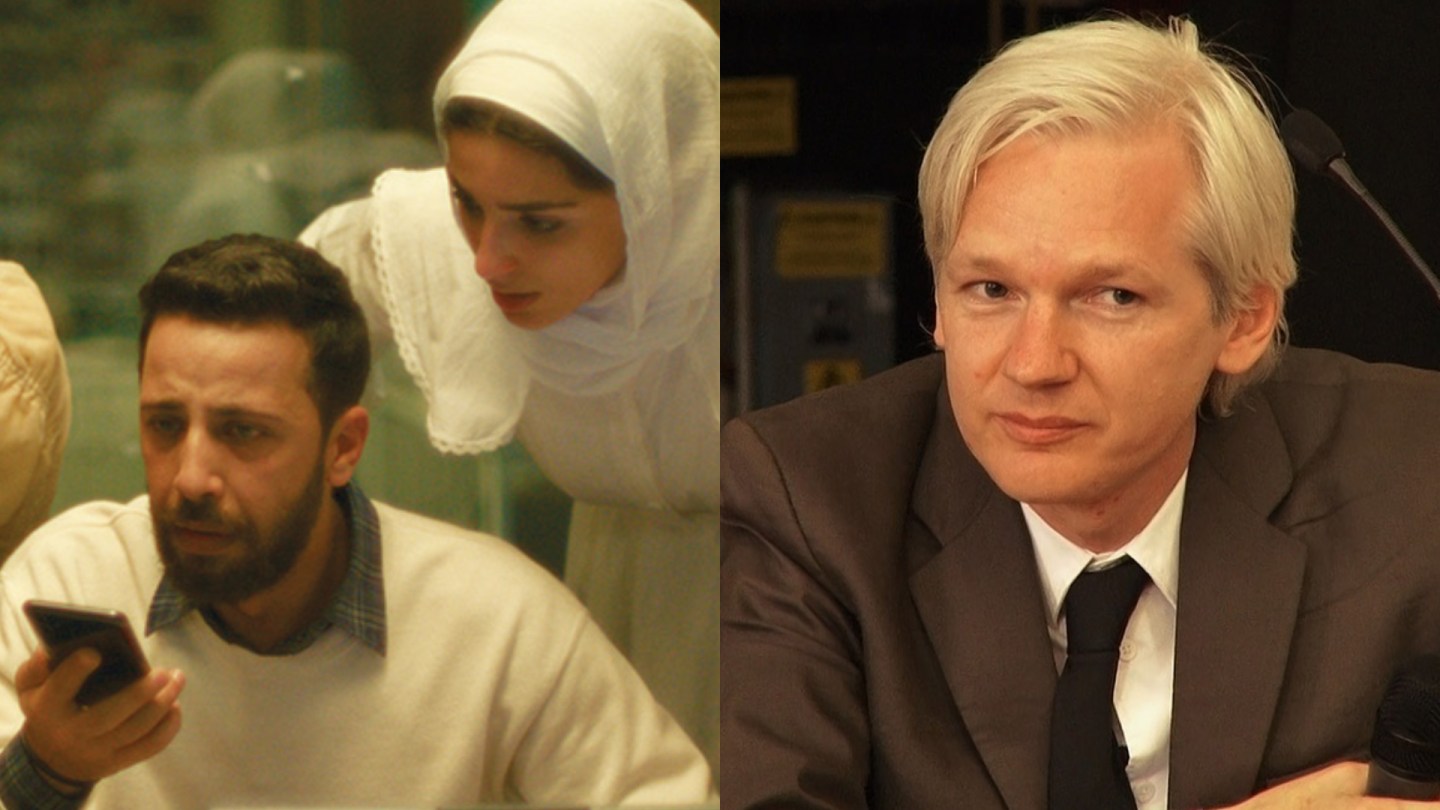
Kathleen Fournier, head of production at Charlotte Street Films and producer of Eugene Jarecki’s Julian Assange documentary The 6 Billion Dollar Man, described a narrowing space for political filmmaking in the streaming era. “As documentaries move to streaming platforms, many of the political and more nuanced and difficult or subjective documentaries did not make that leap,” she said. “What you now find on streaming platforms tends to be historical, [or] it’s true crime, or it’s very personal stories.”
That shift has left politically charged projects struggling to secure U.S. deals. Both The 6 Billion Dollar Man, which premiered at Cannes in May, and Kaouther Ben Hania’s Gaza-set The Voice of Hind Rajab, which bowed in Venice, still lack U.S. distribution. Fournier acknowledged the challenge but argued that new opportunities are emerging outside the studio system. “There are some really agile, wonderful, smaller boutique theatrical distribution companies who really are just running with this,” she said. “The conglomerates can buy up the media landscape all they want, but humans crave stories, and there will always be those people who look to create alternative streaming platforms, boutique distribution. We like stories. We’ll find our way.”
The production of The 6 Billion Dollar Man, which examines the U.S. government’s prosecution of WikiLeaks founder Assange, was itself shaped by political pressure. Initially unafraid to include controversial material, such as former president Donald Trump’s past comments attacking Assange, the filmmakers debated whether to self-censor as political winds shifted toward a possible second Trump administration. “In the end, we decided we just have to tell the story as we intended, with as many facts and as much nuance and complexity around it that we felt an audience could handle,” Fournier said.
The risks extended beyond financing and distribution. Fournier said her team relocated the production to Berlin to avoid legal exposure in the U.K. and U.S. “We didn’t feel comfortable editing in the UK or in the US, because there are laws there and ways to seize footage, and journalists aren’t protected in the way they are in Germany,” she said. “We moved the entire production team and edit to Berlin, and that was really inspiring and very interesting, until the Gaza war happened and we started to see that even Germany, with all of its civic-mindedness, is fallible to ideology and to erosion.”
That fragility, Fournier suggested, underscores the wider uncertainty facing political filmmaking today: whether such projects can still find protection, distribution, and audiences in an increasingly polarized world. While some see new opportunities in alternative platforms and boutique distributors, others point to audiences themselves as the ultimate safeguard.
Artist International Group CEO David Unger pointed to audiences’ growing openness to global storytelling, citing the worldwide success of Korean series on Netflix. “That shows you that the audience will find good stories, and appreciate interesting characters and embrace artists that tell those stories, no matter where they’re from,” he said.
Film data researcher and consultant Stephen Follows urged the industry to remain vigilant. “The 1970s had much more diverse, interesting storytelling than the 1980s, and in the 1990s, things got dumber and simpler,” he said. “The film industry is fundamentally, as a business and as an ecosystem, risk-averse and scared and cowardly. [It] needs agitators, because if we don’t actively do things, the industry acts in horrible ways.”
