


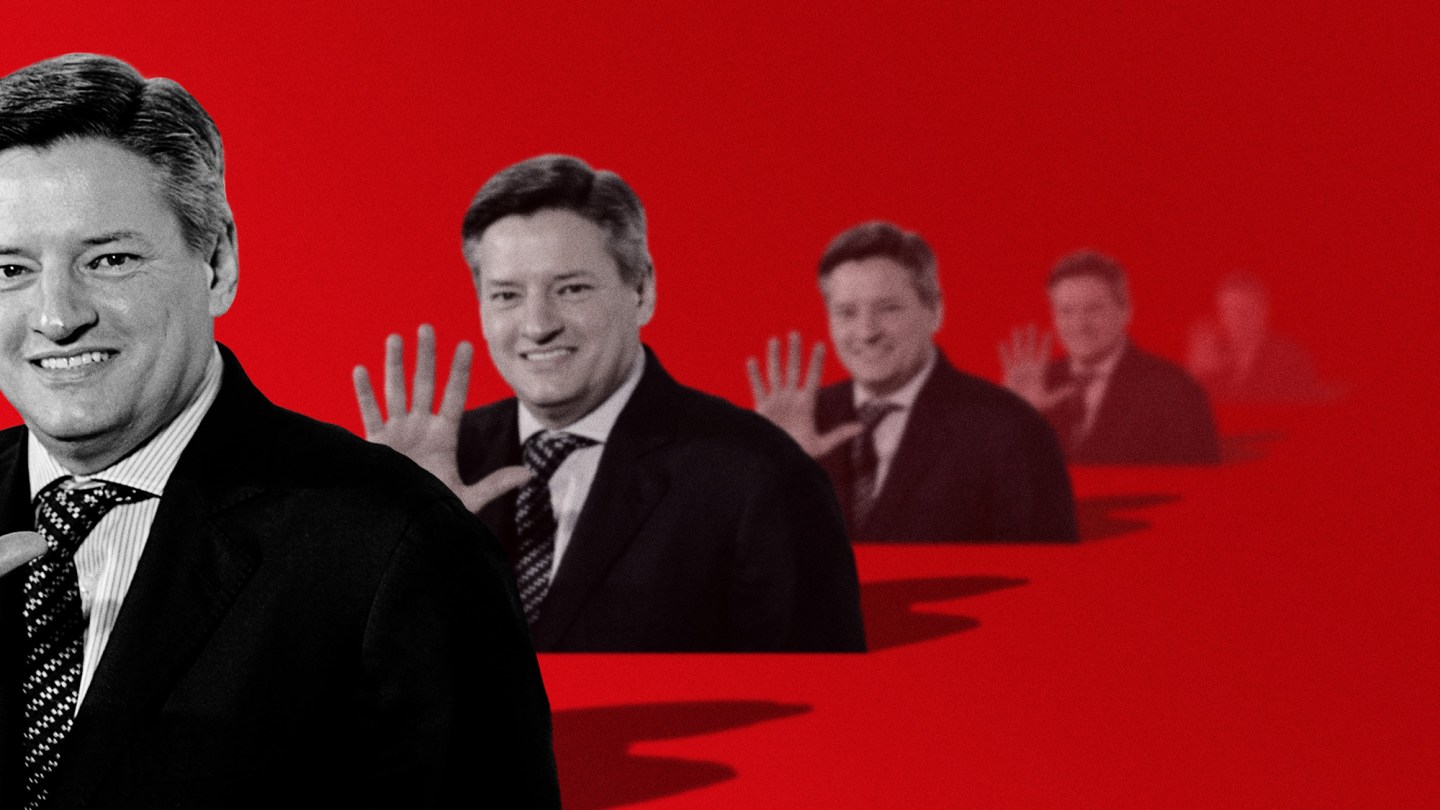
Anyone who’s followed Netflix long enough knows that the streaming giant doesn’t rest on its laurels, and it isn’t religious about anything.
Ads? They are bad. Until they aren’t. Live sports? Not for us. Until it is. Original content? No need for it. Until there was.
The Netflix model is to crawl, start walking, and then to sprint, not being afraid to change course quickly if things aren’t looking great.
It’s that context that makes a few subtle experiments and tweaks by Netflix over the past few days all the more interesting. The streaming giant is bringing back free trials in some markets, a practice it abandoned in 2020 (What’s On Netflix, which first reported the trials, notes that it is not available in the U.S. for now).
And in conjunction with its earnings report, it announced that it would pull back on sharing viewership data for shows twice a year, shifting to a once annual cadence. It only started sharing that data more granularly in Dec. 2023.
Hiding data may not be creator or media-friendly, but it gives Netflix the wiggle room to maneuver and take risky bets without the distraction of analysts wondering about whether it’s working or not.
And once again Netflix is running a veritable chemistry lab of content experiments: YouTube shows! Video podcasts! Live streaming broadcast channels! Cloud-based video games!
“When we expand into new entertainment offerings, new initiatives, we do it gradually,” Netflix co-CEO Ted Sarandos told investors Thursday. “We do it where we believe we can add more value for our members, and we do it where we believe we have the right to win. And then we look for the positive signals before we invest at material scale. This is our M.O. It’s been our M.O. for some time.”
One of those experiments is bundling France’s TF1 channels into Netflix, with one analyst wondering if the service is eyeing similar deals elsewhere. The answer is an undeniable “yes.”
“We’re just adding to the range of capabilities that we have to do that and the mechanisms we have to do that,” co-CEO Greg Peters said. “We’ve built a leading streaming entertainment service by combining an unparalleled selection of high-quality programming, best-in-class product experience. We’ve got a global footprint, big reach and the ability then to deliver huge audiences, deep engagement, industry-leading monetization. So whether through licensing or through new partnerships like TF1, we believe that we can help other producers, other services maximize the value, the relevance of the content that they invest in by finding those bigger audiences.”
Netflix, of course, began its life as a DVD company, mailing new titles to members and disrupting the Blockbusters of the world. But when streaming was still nascent, it leaned in, taking rights that legacy studios didn’t know what to do with and building a juggernaut.
In 2009, when AI and machine learning was not something most people thought or cared about, the service launched the $1 million “Netflix Prize,” persuading AI researchers to develop a machine learning algorithm that could best Netflix’s own content recommendation engine. The company has been the market leader in content recommendation ever since.
And when it came to original content, Netflix opportunistically grabbed a couple of titles … and finding that they worked, went all-in.
So when Netflix brings back the trials, pulls back on the data and starts getting weird with content experiments again, it is in some ways rolling it back to the glory days, when it was a disruptor, not a juggernaut.
Of course back then it was disrupting the traditional entertainment giants. Now it needs to disrupt itself.

