

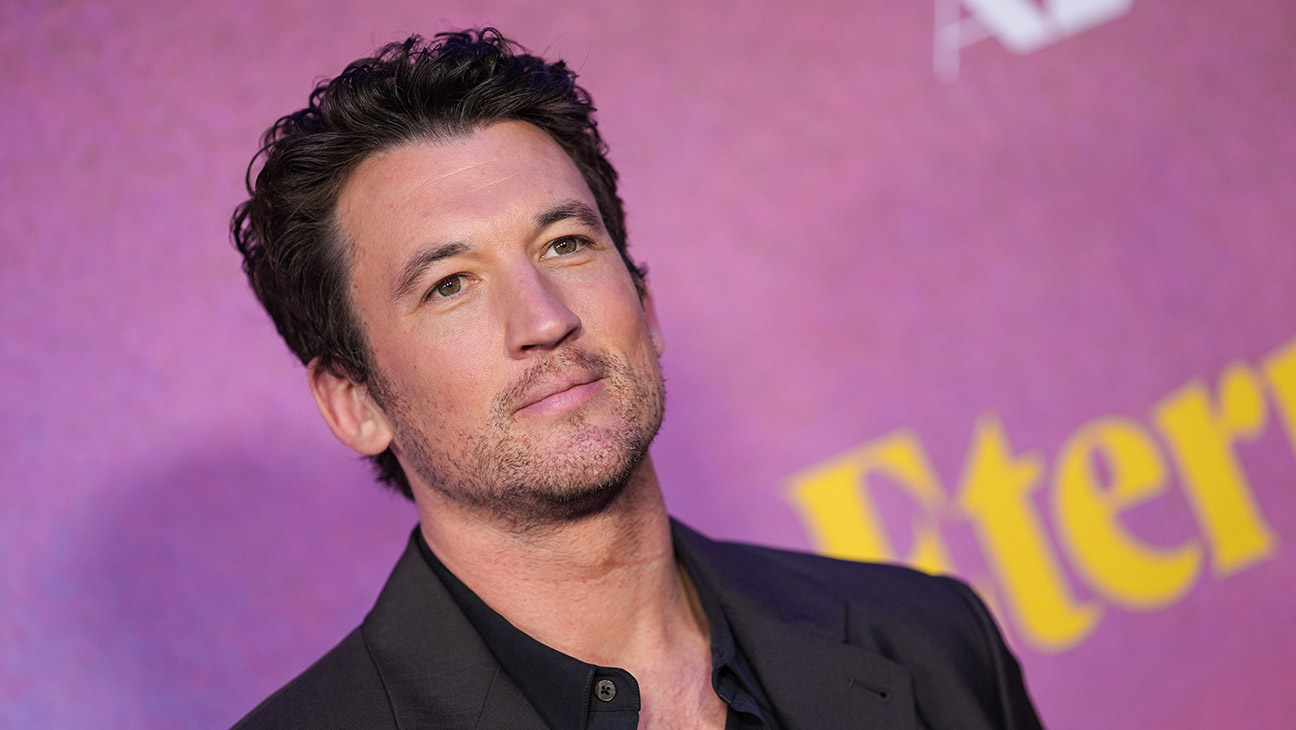
In 2019, Miles Teller became yet another marquee name in a long list of celebrities to enter the adult beverage sector. It wasn’t exactly an obvious entry point. The leading man landed a minority stake in The Long Drink Company, makers of an eponymous ready-to-drink spritzer native to Finland, consisting of gin and grapefruit soda. Now he joins an elite group, one of surprisingly few celebrities to cash out significantly on a booze deal. Earlier this week The Finnish Long Drink sold to the Mark Anthony Group of Companies — makers of White Claw, a top-selling hard seltzer brand — for a reported $325 million.
“I don’t really talk numbers,” says Teller of the acquisition, refusing to disclose his take-home total. “I was always taught that’s not in good taste. All I’ll say is that I’m not retiring from acting anytime soon.”

Courtesy of Long Drink
Nevertheless, equity exits of this order aren’t as frequent as many suspect. Often, the A-list actors, singers and athletes backing brands believe that consumers need to see nothing more than their recognizable faces on a few Instagram reels in order to meaningfully impact consumer purchasing habits. More often than not, they’re proven wrong. Over the last few years, for example, the industry has seen whiskey from Drake, tequila from Justin Timberlake, and vodka from Channing Tatum prominently emerge on shelves only to quietly depart shortly thereafter.
Teller, by comparison, took a much more hands-on approach. He criss-crossed the country, hopping behind busy bars on college campuses in Columbus, Bloomington and Ann Arbor. He doled out swag and signed merchandise at golf tournaments outside Reno. He wrote copy for cheeky ad campaigns featuring an animatronic bear. He took meetings with key distributors. He increased his stake in the company, injecting his own capital to help fund a national marketing expansion.
All this movement was instrumental in moving liquid to lips. Since 2022, the brand has more than tripled in size. Sales of 3.3 million 9-liter case equivalents was enough to make it the 6th largest spirit-based ready-to-drink in the US for 2025.
Pushing it never felt like tedious work because this was a project Teller took on of his own accord. And that’s another key differentiator separating his endeavor from celebrity brands that have sputtered. Most of those partnerships are thrust upon talent at meetings inside WME, CAA and UTA. Teller stumbled upon Long Drink himself at his local New York liquor store, where Finnish co-founders Ere Partanen and Sakari Manninen happened to be hosting a tasting. Teller was taken by the crisp, quaffable drink of their native land. Less than a year later, they were business partners.
For a bankable star with indie bona fides, laying down a stake in Long Drink was more like self-funding an auteur project as opposed to being handed a superhero script. Even if he’s now exiting with blockbuster box office numbers.
In an exclusive interview, the star, who has a supporting role in Michael — out on April 24 —talks about his hands-on role in building the brand, and why you’ll never see him on Instagram.
Congratulations on the acquisition. How have you been celebrating these past few days?
I’ve been feeling very proud. I’m very excited for our founders. How cool for them to come from a country where they don’t export a lot of things on the global stage. But this drink — their national beverage — for them to bring this product here that they believed in and to scale it and grow it organically, it’s the true American dream.
How does it feel different, achieving this type of success as a businessman versus as an artist?
I find them to be very similar. With a movie, I sign onto it because I really believe in its potential. And from there you don’t feel like you’re promoting something so much as you’re supporting something and it’s very easy to support something that you believe in. There are parts of the country where we outsell every RTD [ready-to-drink beverage] by a fairly big margin. So, when I got to those places and everybody is wearing Long Drink stuff, I take as much pride in that as I do when somebody tells me that they really loved a movie that I was in.
Was there ever any long-term intention to enter the beverage space or to be a spokesperson?
Long Drink was certainly my first company. It’s the first brand that I ever really attached myself to in this way. I don’t have Instagram, I’m not on TikTok, I’m not on a lot of these platforms that brands think, ‘Well if he can’t promote it through his own personal channels then how much awareness are we going to get out of it?’ And this just really disproves that and it shows, I think, that consumers can really sniff out bullshit. And they can tell when a celebrity is really just trying to get in and out to make a buck. I’ve been involved in this company for over seven years. It was something that I really believed in and we came up with great ways for me to advocate and put my own branding on a part of this.
Surely you’ve been pressured to join those social media platforms you mention. Do you think their impact on driving sales is overhyped?
I remember early on in my career, even midway through — up until this point — I would have agents and people tell me, ‘You’re not going to get this deal, you’re not going to get that deal, because you’re not on Instagram.’ For me it’s a personal choice. But again, I think how a product lives or dies — how a movie lives or dies — is still word of mouth. You can have all the marketing you want in the world, but if people that tried this didn’t like it and they didn’t refer a friend or tell somebody we were never going to be able to do what we did. We sold 100 million cans in a 12-month period. It all starts with the product, or in film it all starts with the quality of the movie.
So we shouldn’t expect to see you on Instagram anytime soon?
I never assumed people would care about the things I was doing all the time. I personally am not all that interested in that. I’m never going to be on the app to just get a little snapshot into somebody else’s life. I like to keep my personal life private and have people get to know me through the movies I align myself with and my association with Long Drink. That’s just my thing. It would just be pictures of my dog, anyhow. I do have Twitter, mostly because it used to be a fast kind of news source. But I pretty much only post about Philadelphia sports, [wife] Keleigh [Sperry], the Grateful Dead and my dog. I’m fine with people knowing that much about me [laughs].
You said your payout isn’t enough for you to retire from acting, but will it inspire you to pursue, or even self-fund different sorts of acting projects?
Yeah, I think if anything, I’ve gravitated toward underdog stories. I really like chip-on-the-shoulder characters, odds stacked against you — a person or a community. This gives me a lot of confidence to trust my instincts. I’ve been producing for the last several years. Certain actors can get movies made on different budgets. If you can say, ‘Hey I’m attached to this thing, let me find a director and what actors do we like for this, do I have relationships with them?’ So, it certainly helps.
It seems like a lot of indie projects kind of have that same startup mentality.
Yes, [working on movies like that] lends itself to believing in startups. A lot of people have a lot of similar skills. But you’re kind of betting on a person. And in this case, our Finnish founders, those are just guys that I bet on. And they bet on me — as an investor, as someone who could be front-facing on a business. Especially when you look at a lot of the other celebrity-backed brands, it’s a tough market.
Talk about the toughness of that market. Did you have a sense of how the adult beverage sector worked before you invested? And why do you think you succeeded where other celebrities have failed?
Yeah, well I’ve been a consumer of alcohol for quite a while, so I had a good sense of how that went [laughs]. No, but I’m glad you mention it because when I first got involved, I was talking to a distributor and he said, ‘Miles, I’ve seen a lot of these celebrity brands come and go. They think that just because people like their movies they’re going to buy their product. That’s not how it goes. The analogy I’m going to give you is when you’re having breakfast say you have bacon and eggs. The chicken is involved, the pig is committed. You gotta be the pig.
I know you’ve spent a lot of time in bars, publicly pushing Long Drink. But what is a more behind-the-scenes example of that commitment?
I’ve been very involved in so many meetings, from a marketing and financial perspective. With a lot of the marketing I was very hands on. We did this commercial and some of the guys in-house were writing some comedy copy and we were still a small business and we didn’t have a ton of budget. I said, just give me an animatronic bear and I’ll know how to shoot this thing. Who doesn’t love a friendly animatronic bear?
Will you continue to be involved in the brand, or are you ready to move on to the next business venture?
As much as the headline is ‘a sale,’ and it certainly is — we’re being acquired by Mark Anthony Brands — but for us this is an opportunity to continue to scale. Mark Anthony Brands has proven itself and we feel very comfortable and confident with them. So much of this business is awareness of the product. We’ve done incredibly well in sales and still have a relatively low brand awareness. We’re in the single digits percentage-wise for that. I see it more as a handshake and a partnership and the start of something. It’s not the end for us. It’s not like a car dealership, like here’s your car keys, see you later.
You’re friends with Ryan Reynolds, another actor who benefited from a sizable booze buyout, with his Aviation Gin brand. Has he reached out to congratulate you?
That first wave of guys with Ryan and Clooney and Rande Gerber and Mike Meldman — it kind of started it all off where you had a lot of these celebrity copycats come in and say, ‘Oh man, look at this cash grab.’ But anyone in the industry will tell you that’s just not how it goes. If you do the research on the celebrity brands, a lot of times it doesn’t work out. It’s tough to build a business, in general. I can tell you, I’ve had a lot of texts from various friends and people who have built companies and had companies fail and they said, ‘Miles, this is a huge, huge win. It doesn’t happen very often, it’s extremely rare.’ I’m sure it’s less than one percent of people who start companies who end up selling it for any kind of profit. It feels good because it was a new arena for me and I’m really proud of it.
