


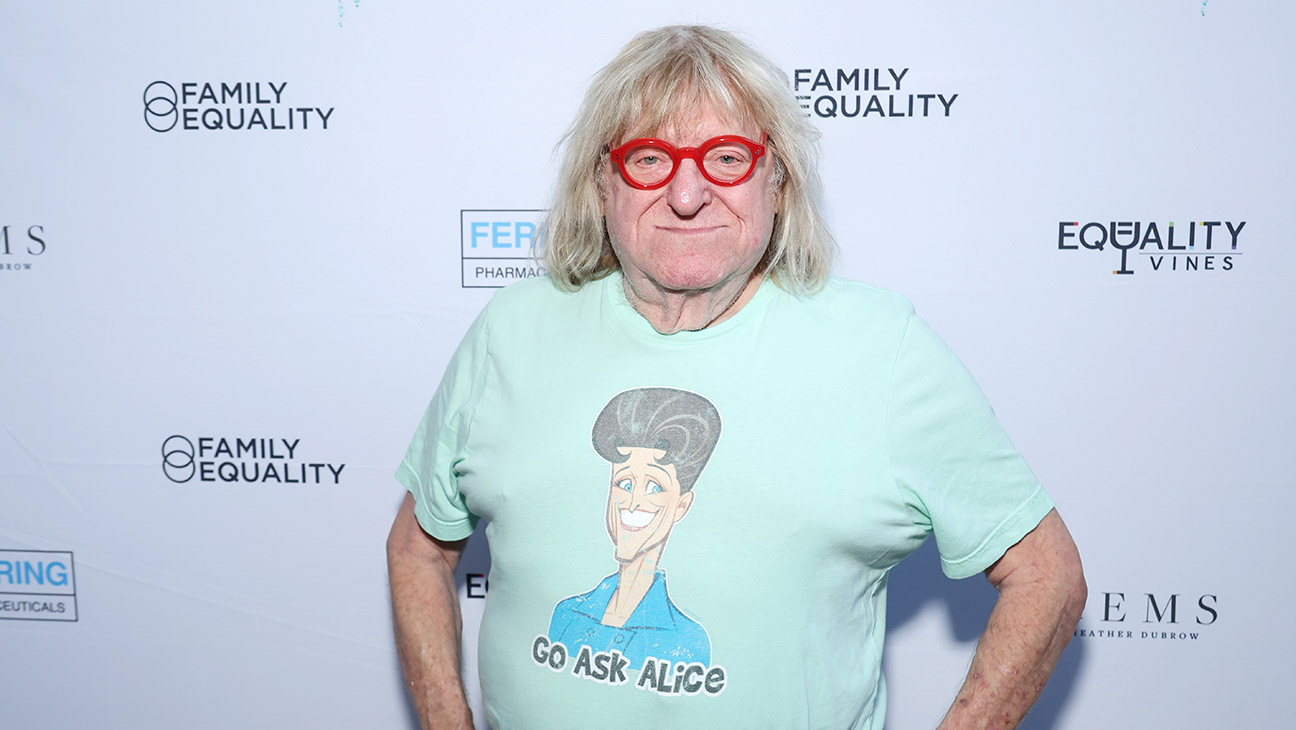
When Seth Rudetsky received an invitation to appear on Nikki Glaser’s podcast, he had no particular reason to think it wasn’t real.
Rudetsky, the Broadway performer and SiriusXM host, gets asked to do podcasts all the time. Better yet, this one was offering him between $4,000 and $5,000 to appear. “Oh my God, they’re actually paying for a podcast,” he remembers thinking. A Glaser fan, Rudetsky quickly said yes.
The invitation also seemed to know an awful lot about him. It mentioned his Broadway cruise and his work with Sara Bareilles — the kind of details that suggested somebody had actually done their homework.
“All these specific things about my career,” Rudetsky recalls. “I’m like, oh my God, they totally know my work.”
But they did not.
Rudetsky had stumbled into an increasingly sophisticated scam in which fraudsters impersonate famous podcasters and their representatives, using flattering, highly personalized invitations — most likely composed by AI — to lure prospective guests into handing over money, login credentials or control of social media accounts.
And he is not the only recognizable Hollywood figure who fell for it. Bruce Vilanch believed Terry Gross wanted him on Fresh Air. There is no indication yet if the two scams are connected, but the pattern follows similar AI-assisted scams reported on recently by THR.
“It was so articulate and so like her,” the veteran comedy writer and performer tells The Hollywood Reporter of an email he believed came from Gross. The correspondence that followed was equally persuasive, laying out the subjects the person identifying themselves as Gross intended to discuss with him, demonstrating what appeared to be deep, actual knowledge of Vilanch’s work.
“I thought, ‘Well, this must really be Terry,’” Vilanch recalls.
There were, of course, red flags, in retrospect at least. Vilanch knew Fresh Air was an NPR production with an entire organization behind it, yet Gross seemed to be personally handling the booking. He decided perhaps she was simply “a maverick.”
Then “Gross” asked him for money. The explanation was tailored to the moment: NPR was a nonprofit, they explained, but the government had cut funding and the organization needed help. Vilanch found the request strange, but by then the correspondence had established enough credibility that he decided to contribute.
“It felt real,” he says. So he sent the money.
But the scammers didn’t disappear after getting his money. They continued preparing him for his Fresh Air appearance, sending more questions and ultimately scheduling the interview. When the appointed day arrived, Vilanch clicked the link. Three windows appeared on his screen: himself, one labeled NPR and a third containing a man.
“Hello, this is Mike,” the man told him. “I will be conducting the interview.”
Vilanch stared at him in disbelief.
“No, you won’t,” he replied. “I’m talking to Terry or I’m talking to nobody.”
The man explained that Gross was conducting another interview. Vilanch’s skepticism finally overwhelmed his willingness to believe. He waited about 15 minutes, then left. He sent one last message to his supposed host: “Whoever you are, I hope you enjoy the paltry sum that I sent.”
Vilanch then contacted WHYY, the Philadelphia public-radio station that produces Fresh Air, to warn them someone was impersonating Gross. To his surprise, they already knew.
Vilanch says the station asked him not to immediately post publicly about the scam and told him others had reported similar impersonations. He subsequently spoke with a WHYY media executive and turned over his entire email chain.
For Rudetsky, the scam had a different objective.
After accepting the supposed Glaser invitation, he was asked to join her “manager” on Zoom for a technical setup involving Facebook Live. The man’s camera was off. He had a British accent but told Rudetsky he was in Pakistan. Even his email address struck Rudetsky and a colleague as suspiciously literal, something resembling “NikkiGlasersManager [at] Gmail.”
Yet each compounding oddity was just plausible enough to ignore. Eventually the “manager” began guiding Rudetsky through Facebook permissions. Administrative control of Rudetsky’s page still belonged to a marketing company he’d worked with years earlier, so Rudetsky brought its representative into the process.
Later that night, Rudetsky tried to log into Facebook. He couldn’t. At first he blamed the marketing rep. Then, lying in bed around midnight, Rudetsky suddenly wondered whether something more sinister had happened. He Googled a combination of words: podcast, scam, celebrity, Facebook. Immediately, he says, he found an article describing essentially what had just happened to him.
“Oh my God, oh my God,” he remembers thinking.
Suddenly the oddities made sense: the email address, the manager overseas, the turned-off camera, the elaborate Facebook instructions. Rudetsky eventually regained control of his page. He says his former marketing company was also compromised, although Rudetsky doesn’t know precisely what the scammers accessed or what damage they caused.
Both Rudetsky and Vilanch were left wondering how people who considered themselves reasonably savvy had been taken in. And both kept returning to the same thing: the extraordinary specificity of the approaches.
“I know why I fell for it too, because I’m so old. I don’t think about AI,” Rudetsky says.
The supposed Glaser representatives knew about his Broadway cruise and his work with Bareilles. To Rudetsky, those details functioned almost like authentication.
“Wow,” he remembers thinking. “Nikki Glaser loves my Broadway cruise.”
Vilanch experienced much the same thing. The correspondence didn’t merely imitate the mechanics of a booking request. It seemed to imitate Terry Gross’ voice itself, including the preparation and literacy he associated with her.
“They went above and beyond what they had to do to nail me,” he says. Then he reconsidered how much “work” might actually have been required. “Now I feel less bad because they could probably AI themselves into all of the work that I thought they had done.”
There appears to be no indication the scammer or scammers behind this web of deception are anywhere close to slowing down. In fact, Rudetsky’s experience did not even end with Nikki Glaser.
Not long afterward, another invitation arrived, this time supposedly from Amy Poehler’s podcast. Rudetsky actually knows Poehler, so this time he employed the most reliable authentication technology available: He asked Amy Poehler. No, she replied, she hadn’t invited him onto her podcast.
Rudetsky says the fraudulent invitations continue to arrive. These days he sometimes entertains himself by engaging the scammers to see how far they’ll go, despite being warned that even replying may simply confirm that his email address belongs to an active target.
After one supposed Poehler representative contacted him, Rudetsky eventually announced that he’d reported the scam. The response was remarkably cool: “Noted. We’ll see what happens next.”
Vilanch mostly remembers the embarrassment of realizing he’d been taken. “You just feel bad because you feel like a schmuck and because you’ve been duped,” he says.
Hearing of Rudetsky’s own troubles made him feel a little better.
“They picked on two nice Jewish boys,” Vilanch says, “who give people the benefit of the doubt.”
