


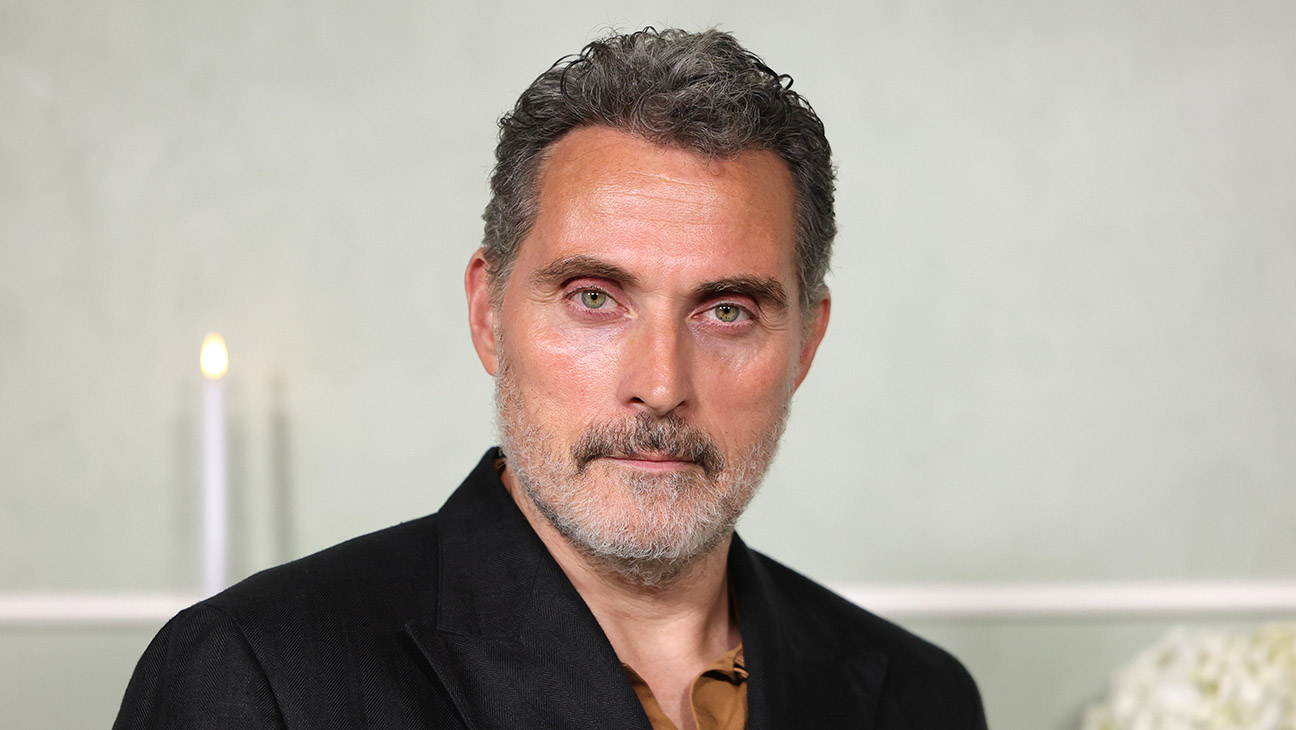
For the past several decades, Rufus Sewell navigated his career with an overarching no-no: getting stuck on a continuing TV show. “The idea of security has always filled me with fear,” says the London native. “The idea of being tethered was never my dream.” Yet, while he’d previously starred on Prime Video’s The Man in the High Castle for four seasons, Sewell has noticed a change in his mentality with Netflix’s political drama The Diplomat, on which he just completed production for season four.
“I would rather be killed off than be stuck in a rut, but if [The Diplomat] continues this way, I would love to do it for a few years,” he says. “All I know is that my career-long dread of a long-running series has not continued with this one.”
It’s a good thing, too, since Sewell’s work on the show seems to generate more attention by the year. As the wily, at times maddeningly self-interested Hal Wyler, the actor has worked wonders opposite star Keri Russell, who plays Kate Wyler, in creator Debora Cahn’s tricky portrait of contemporary marriage and power. While Russell has received Emmy nominations from the beginning, Sewell received his first best actor nod for season three this year — with the show also breaking into writing and other categories for the first time.
“It feels like it took a while for people to really catch on to what was so special about it,” says Sewell, previously an Emmy nominee for his guest turn on The Marvelous Mrs. Maisel. “The cliffhangers and things that you might associate with a different genre and possibly even different quality of show — within that, you’ve got something very sophisticated, and I think people took time to get their heads around that. It’s like people are beginning to see our baby in the way that I always saw it.”
Sewell’s canny performance propels much of the character-driven mystery of The Diplomat. Hal recklessly careens between personal ambition and marital loyalty. The third season opens with newly minted U.S. President Grace Penn (Allison Janney) selecting Hal as her VP, notably over Kate, a seasoned diplomat who’d been wrestling with her own complicated interest in the role. This leads the couple to separate for most of the season.
“I had a growing concern that something needed to change … and in season three, that happened,” Sewell says of the dynamic between Hal and Kate. “You don’t want to rinse and repeat because the audience gets very tired of it. The change in status between the two of us, really mixing things up, is the best hope of keeping the kernel of what we love about this. It’s what I love about the show: It creates new relationships.”

Rufus Sewell as Hal Wyler in The Diplomat.
Clifton Prescod/Netflix
The finale then ends with a series of emotional, stunning scenes — Kate asking Hal to take her back, only to learn that he’d been working behind her back with Grace in matters of delicate, risky, aggressive geopolitical strategy. Kate is as shocked as the audience to discover Hal’s betrayal — something Sewell had to keep in mind as he played a man sitting on big secrets all season long. The actor requested years ago that Cahn inform him ahead of time of any character reveals being kept hidden, so as to feel more equipped to play a guy holding his cards perilously close to the chest.
“There might be three different stories going on, one of which only truly gets revealed at the end — but all of them have to be played fully even if they seem in the end to be playing in opposite directions, and that’s a real challenge,” Sewell says. “The information might affect the playing in an obvious way, or it might not, but you want to be given that choice.”
The Diplomat has expanded its scope to explore intimate stories of power and manipulation within its high-stakes political world. The plot moves in accordance with how characters evolve in their relationships — and Hal’s actions often inform the drama’s larger crises. He can be painted as a villain rather easily, which Sewell resists on a constant basis.
“I still think that he’s basically a good guy — he is narcissistic and I think he is hugely ambitious, but he also is ambitious because, in his heart of hearts, he wants to do good things,” Sewell argues. “You can tell yourself you’re a good person every day, but you must remember that’s what people do in order to do bad things.” The actor later puts Hal’s predicament another way: “He really believes in being in the room, even in a compromised position. The idea of what you give up for access and what those small compromises do to you is something I’m very interested in. I’m not drawing a final conclusion on it.”
That nuance in the writing allows Sewell to play with all kinds of shading. The actor remains tight-lipped about season four, except revealing that Bradley Whitford, who portrays Grace’s husband, first gentleman Todd, has a bigger role as expected. Cahn will zero in on a dual marital study here, finding new notes of contrast and parallel. “These characters are so different and their relationship is so different,” Sewell says. “There are just so many different levels to it — and the opportunities for drama and comedy are really being leaned into.”
This story first appeared in a July stand-alone issue of The Hollywood Reporter magazine. To receive the magazine, click here to subscribe.

