


You’ve got to be either a saint or a masochist — maybe a little of both — to try to explain American partisans these days. Seek out figures on the far left or far right, after all, and you’ll get either criticism for snarking (from that side) or blowback for platforming (from the other side).
Of course such work is essential at a moment when too many of us listen only to our allies. That’s where the sainthood comes in.
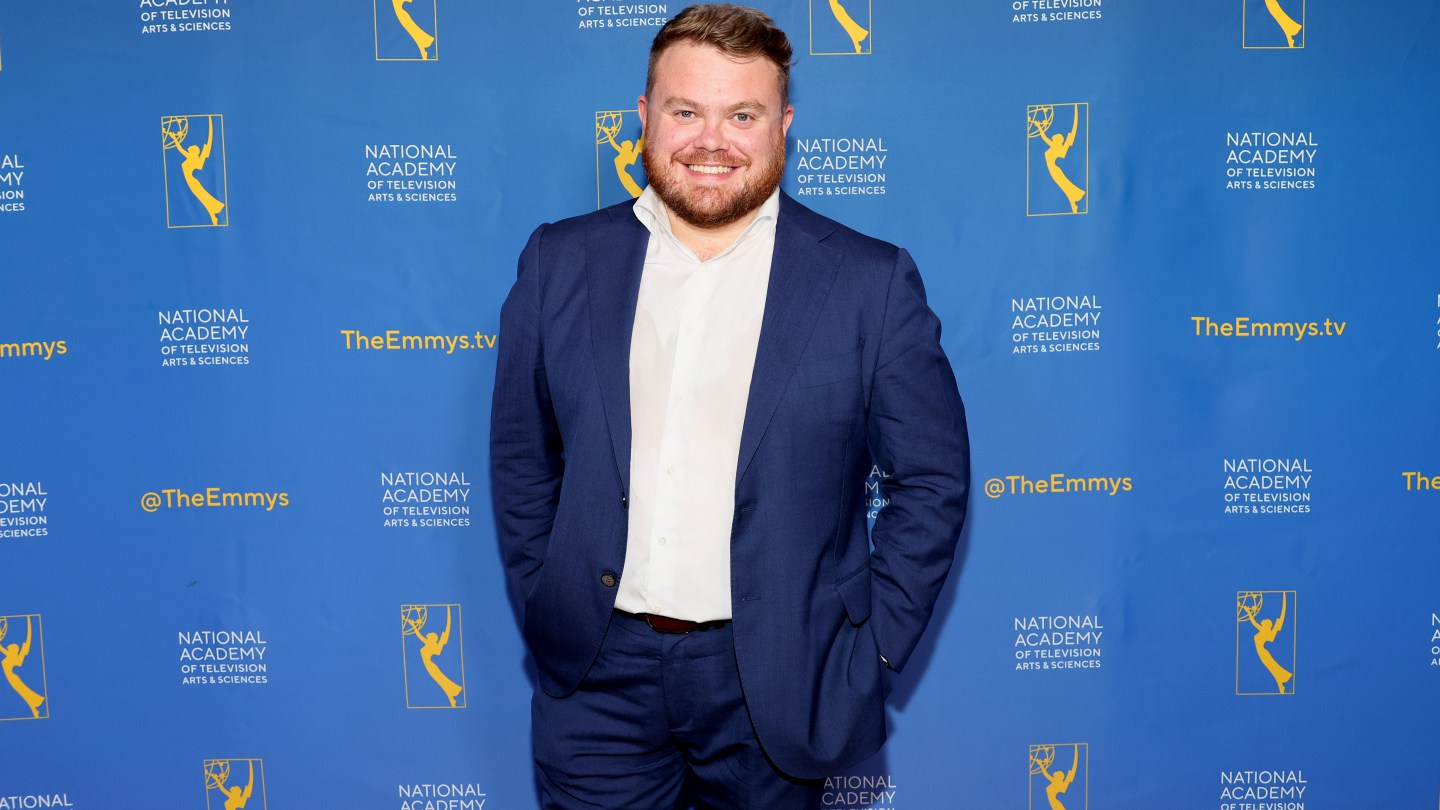
All of this forms the unique, admirable and I-still-wouldn’t-want-to-be-him professional role of Donie O’Sullivan, the Millennial CNN reporter who travels around the county earnestly-wryly talking to hardcore figures on all sides, who have a noticeable tendency to open up to him. (That recently included an hourlong Hasan Piker-focused special on the Democrats’ insurgent left and a shorter package this week on the Minnesota gubernatorial candidacy of MAGA hero Mike Lindell on the Trumpian right.) In a time of echo chambers, O’Sullivan is both anomaly and antidote. He’s also a legacy journalist in an influencer world, its own Rubik’s Cube.
As an intense primary season comes down the homestretch — key races testing the far left and far right unfold both in Minnesota and Wisconsin Tuesday — O’Sullivan seems particularly well-positioned to document where he thinks the country is going. Not to mention describe what it’s like to hurl yourself into the spray with every segment. So The Hollywood Reporter hopped on a Zoom with the Ireland-born journalist to ask how he thinks America is doing, and what it’s doing to him.
You’ve covered extremism for a whole bunch of years now. How much more extreme is it in 2026?
I have been covering the fringe for a long time, and what strikes me as we head into the midterms is what was considered fringe on the left and right is now often part of a prominent debate in both parties. On the right you see what Tucker Carlson and Marjorie Taylor Greene are doing, mounting an insurgency of their own. And you have that on the left too, which we’ve seen in some of the primary races. But I also think we have to be careful not to make a false equivalency between the parties. I often see Hasan Piker in the same breath as Nick Fuentes and people who do that aren’t taking the time to listen to either. A lot of speech on the far right is motivated by blatant antisemitism. Fuentes is saying Jews = bad. Endlessly. Unapologetically. If you listen to Piker he makes the point that ‘I’m not antisemitic I’m anti-Zionist.’ Some will argue the effect is the same. But I find fringes on the left really go to great lengths to try and separate Jews and Judaism from Israel.
Certainly both sides do seem to be capitalizing on the same sense of disaffection with government.
That’s what’s so striking — the similarities. I spend a lot of time talking to people on the left and spend a lot of time on the manosphere and in both feel people like the system is not working and want to do something about it. A lot has been exacerbated by feeling alone and on social media; that’s something I feel very there-but-for-the-grace-of-God about too, by the way. We’re up against trillion-dollar industries of algorithms and so it’s easy to fall into rabbit holes, whether it’s a conspiracy theory or just outrage.
You’ve seen that up close so many times — what’s an example of where that rabbit-holing really turned ugly, in your opinion?
A lot of young people think that what Luigi Mangione is alleged to have done is not that bad. An innocent man was assassinated walking in the streets of New York, and so it can be hard to understand that. But we should talk to those young people and find out why they don’t think it’s bad. Don’t let being offended by someone’s opinion stop you from talking to them. Because their opinion is not going to change. And I’m personally not interested in changing anyone’s opinion. But I’m a believer in hearing things and sharing things. I even think that about January 6 — there was a lot of disillusion and disaffection. Vigilante justice is not what we should be dong of course. But we should listen to why people feel the need for it.
Do you get how some people can see that as problematic? That there is a legitimizing effect when you have someone with outlandish theories or dangerous grievances on CNN?
That’s one of the biggest question on my beat, the platforming. And there are certainly cases where we don’t want to just amplify. But the mainstream media is no longer the gatekeeper of information, which means that a Hasan Piker or a Tucker Carlson have millions of people listening to them already. And the question is whether we can be part of the conversation beyond soundbites or just sit it out and do a disservice to audiences. I’ll choose the conversation. We also have the resources to fact-check these spaces, and I think that gives us a responsibility to cover them.
Do you think that makes a difference for all the people down the hole? Not rhetorical — genuinely asking.
I’m overwhelmingly pessimistic. But I do see an opportunity where journalism can shine if we adapt. We did an episode on someone who went down the rabbit hole, a liberal woman in the Bay Area. And it started with concerns about vaccines and soon she got pulled into homophobia and transphobia and racism and antisemitism. All kinds of horrific things. And she came out of it, and realized so much of what she was thinking about vaccines was colored through this terrible lens. So I think it can happen.
Your job is listening to people you don’t agree with. It’s not a role most people in this country seek out. What makes you do it?
The thing I’m most interested in in the world is having those difficult conversations. That’s what’s going to get us out of the dark situation we’re in.
You undertake this job at great risk to yourself. I know most journalists don’t want to be the story but the threats you get online are pretty eye-popping. Does it ever get easier? Do you still get scared?
I like to think I’m calm about it but this is easier said than done. The first time the full Twitter mob is on you it’s very scary. There’s doxxing, among many other things. I’m definitely in a space now where I’m fine with it. I speak to young journalists sometimes and my advice is that hate on social media is just part of the job now. I wouldn’t suggest anyone getting this business if they want to do impactful reporting and think that won’t be there. Not just covering extremism — covering anything.
Do any coping techniques help? Besides touching grass.
[Laughing] That definitely helps. Just getting offline. But a lot of it is I keep a point of being in touch with a lot of the subjects of our stories. Not everybody is happy of course but I do hear a lot that I was fair to them and that helps a lot. I want to be fair to them even if they’re not always going to be fair to us.
It does seem like a can’t-win situation — someone will always be mad. Which I know people say means you’re doing your job right but it also means that you’re doing your job unhappily?
The stuff I get in the most trouble on the internet is the stuff that in a way is most important. With this episode on the insurgent left we spoke to Hasan Piker and we spoke to James Carville. Just a really big story. And of course part of the left attacked me for speaking to Piker at all, and then people attacked me for speaking to Carville at all. They’d even cut up clips so that it looked like we were only talking to them. But we worked really hard to give everyone a hearing. [Ed note: Piker, at least, was happy with the segment, telling his livestreaming audience as he watched the special, “Donie’s the man. The Irish guy. He’s very cool, in spite of the fact that he’s at CNN.”] And that’s something we should be doing more of, as a profession, giving everyone a hearing; that’s the job of a journalist. To get beyond the tables in New York and DC and the Acela car to hear what a lot of different people think.
One proof of that is Lindell. Not someone whose election conspiracy theories I or many of us agree with. And yet I came away from your segment kind of liking the guy, someone who has a great backstory as a former addict who pulled himself up by his bootstraps and genuinely seems affable. You can almost forget all the dangerous stuff he’s spouting to Donald Trump’s glee. But of course we shouldn’t forget that, especially as he stands a good chance today of becoming the Republican nominee for governor of Minnesota.
Lindell is a very likable person and I do think unlike a lot of the MAGA guys who don’t believe the shit they’re saying he truly does believe what he’s saying. But is also doing a lot of dangerous and frankly dumb stuff. But the goal is to understand people. Someone on social media will say ‘why are you humanizing this person?’ To which my response is ’they’re human.’ And dehumanizations are the reason we’re in such bad shape today. I haven’t had the opportunity to interview Nick Fuentes one-on-one yet but from the unguarded moments I’ve seen he’s a terribly insecure, sad Gen Z person and we should show that.
Is that the end goal then? Understanding not just the ideology but the humans behind it?
I think the goal is helping us run a society. Our job as a country is to change the [feeling of disaffection] and give people a system of government that actually feels like it’s doing someone for them. That makes them become engaged instead of just cheering on violence. That’s what we’re trying to do on-air.
And that makes them feel like the other side is not out to get them.
Totally. You know, one thing that comes up a lot is the viewers who disagree with who I’m interviewing will say ‘you made someone look like a fool’ and then viewers who agree say ‘he sounds smart.’ Their reactions can say a lot more about them than they do the subject.
What about from the subjects themselves — you say they feel you’re fair but you do challenge them in the moment and you certainly do in the voiceover later. Plus there’s the fact that you’re from CNN. Do you get a lot of pushback from them?
I think a lot of people want to be heard and want to talk. I’ve interviewed supporters of election-denial claims who say ‘I don’t agree with you but thank you for having the conversation with me.’
How do all your reporting excursions leave you feeling about our prospects as a functional society? Is there hope for reconciliation or not really? Do people want nuance?
I think we’re in a bit of trouble. [Gives a knowing-bitter laugh]. But I think people do want nuance. You’ve seen that with the success of podcasters like Joe Rogan or Lex Fridman. People will listen to hours of a discussion. Rogan is so meta — he’ll go back to ancient civilizations and then even talk about alien civilizations. And so many other podcasts too. A lot of the conversations are dumb and uninformed, yes. But there’s still an appetite.
But that’s a form of algorithmic engagement too, isn’t it, following one singular leader because he knows how to press the conspiracy-theory button or get us outraged?
I think that’s right but what this interest also shows is that there’s a huge opportunity for journalists to have these longform conversations too. Because a news organization that comes in to take advantage of this [appetite] has also done their research and anticipated questions and is preparing for pushback.
You’re more optimistic than I am that what people want is fact-based, clarity-minded journalism. It feels to me too often that it’s more attractive for people to get mad and reductive.
That’s the challenge of a big outlet: how do we create stuff that’s compelling and gives the space to have these conversations and maybe even can go viral, but isn’t conspiracy theory or just tawdry. I don’t know that we can completely avoid all of that. But I think we can get closer. It’s all a question of quantity. We don’t do a story [on extremists] every single day, nor should we. But also when we discuss these things, let’s really discuss them.
Give me a prediction on where this all goes, particularly on the left. Are we really witnessing a sea change? Or is this something that rhymes more with 2018, where there’s a Democratic insurgency midway through Trump’s term and then it dies down two years later when he’s gone from office.
The big difference between now and 2018 is that the left has a massive independent media and infrastructure that keeps getting bigger. Pod Save America and Hasan Piker and everything in-between. The MAGA-verse has had this kind of scale for a decade, and look at what it did for them. Now the left has it. I think two years from now when we’re in the middle of presidential debates the effect will be huge. I don’t think it’s settling anytime soon.

