


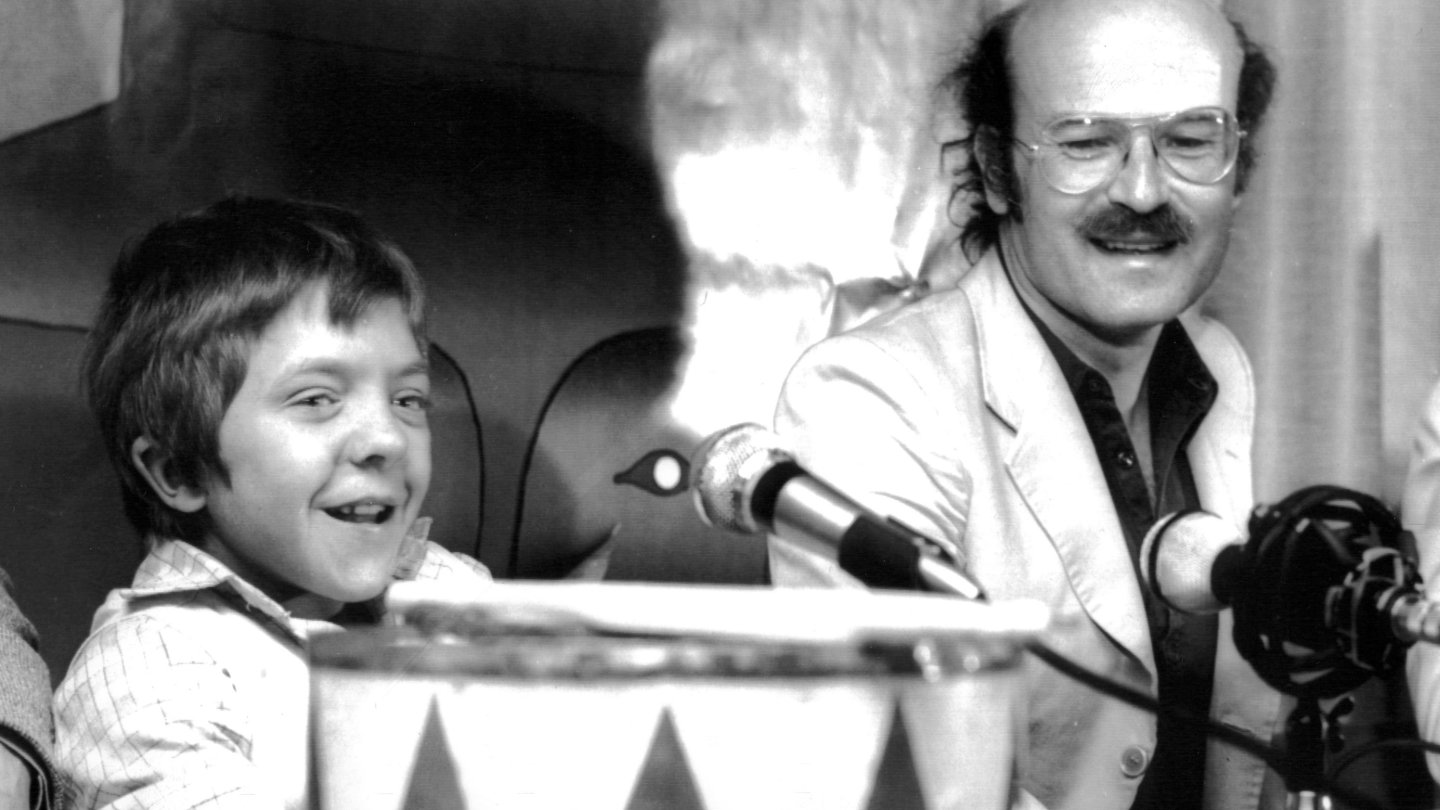
This Cannes, Volker Schlöndorff is just here to enjoy himself.
“Go there for the fun,” he recalls former Cannes chief Gilles Jacob telling him recently. “You got the Palme already.”
It’s the kind of advice only a filmmaker with Schlöndorff’s history on the Croisette could receive. He arrived in Cannes for the first time with Young Törless in 1966, his debut feature and one of the opening salvos of the New German Cinema movement. The adaptation of Robert Musil’s novel about cruelty and authoritarianism in an Austrian military boarding school caused an immediate scandal. Mid-screening, Schlöndorff remembers, a German cultural attaché stormed out of the Palais shouting: “This is not a German film!”
“For publicity, I couldn’t have asked for anything better,” Schlöndorff says now.
At 87, Schlöndorff speaks with the calm precision of someone who has spent decades arguing about cinema, politics and history — often all at once. His films have done the same. In dozens of features over six decades, from The Lost Honor of Katharina Blum (1975) to Coup de Grâce (1976) to The Ninth Day (2004), Calm at Sea (2011) or Diplomacy (2014), his work has traced the fault lines of European history: fascism, terrorism, war, ideological collapse, and the uneasy compromises between morality and survival. Few filmmakers of his generation moved as fluidly between art house prestige, literary adaptation and political confrontation.
And few remained so closely tied to Cannes.
After Young Törless, Schlöndorff returned repeatedly to the festival through the late 1960s and ’70s, sometimes triumphantly, sometimes less so. He jokes now that several of those films “have fortunately been forgotten.” But Cannes remained the recurring stage on which Schlöndorff’s career unfolded — and where, in 1979, it reached its defining peak.
That was the year The Tin Drum, his adaptation of Günter Grass’ sprawling anti-fascist masterpiece, shared the Palme d’Or with Francis Ford Coppola’s Apocalypse Now. The pairing felt symbolic: New German Cinema meeting New Hollywood at the height of both movements’ artistic ambition. Coppola’s Vietnam epic alongside Schlöndorff’s surreal story about a child who refuses to grow up as Europe descends into madness.
After Cannes, The Tin Drum went on to win the Oscar for best foreign-language film, the first German movie to do so since the end of the Second World War.

New World Pictures/Photofest
“Sometimes, you’re kissed by the Muses, as I was with The Tin Drum. That will remain, forever, my peak,” he acknowledges. “As time goes by, I feel grateful to have had such a peak.”
If The Tin Drum became the film that permanently defined Schlöndorff internationally, it also clarified the themes that had always driven him. History, in Schlöndorff’s cinema, is never background. Politics enters bedrooms, kitchens and private lives whether people invite it in or not.
That worldview was shaped as much by biography as ideology. Born in Germany during the war, Schlöndorff spent his formative years in France, attending school there and beginning his cinema apprenticeship under such directors as Louis Malle and Jean-Pierre Melville. He absorbed the intellectual rigor of the French New Wave. Later, after international success brought him to Hollywood, Schlöndorff would find a counterweight in his friendship with Billy Wilder, who taught him “how to not let your profession entirely take over your life.”
But Schlöndorff is, was and will always be, in his words, “a political animal.” He was formed amid the ideological tumult of postwar West Germany in the 1960s and ’70s. Several of his films — The Lost Honor of Katharina Blum, the omnibus film Germany in Autumn (1978), The Legend of Rita (2000) — confront the lingering presence of Nazi and authoritarian ideology in German institutions and the radicalization that emerged in response. Schlöndorff sympathized with the anger driving the student movements of the time and pushed back against those condemning the radicals, including German left-wing terrorist group the Red Army Faction, who were using violence to achieve political ends.
There were detours. Hollywood came calling after The Tin Drum. Schlöndorff turned down an offer from Steven Spielberg to do an episode of The Twilight Zone — but did make Swann in Love (1984) with Jeremy Irons, Death of a Salesman (1985) with John Malkovich and Dustin Hoffman, Voyager (1991) with Sam Shepard and Julie Delpy, even the now-forgotten, first adaptation of Margaret Atwood’s The Handmaid’s Tale (1990) starring Natasha Richardson, Faye Dunaway and Robert Duvall.
New York briefly became home. Then history intervened again. The fall of the Berlin Wall pulled Schlöndorff back to Germany, where he spent years helping revive the legendary Studio Babelsberg following reunification — the backlot, based in East Germany, was threatened with collapse — work he now describes as necessary if frustrating and far removed from filmmaking itself.
This year, Cannes brings him back once more, out of competition, with Visitation, adapted from Jenny Erpenbeck’s novel Heimsuchung. Set across decades at a lakeside property in Brandenburg, the film follows successive inhabitants through the Nazi era, East Germany and reunification, tracing how political systems reshape ordinary lives whether their occupants acknowledge it or not. The film’s ensemble cast includes Lars Eidinger, Martina Gedeck, Susanne Wolff and Angela Winkler. StudioCanal is handling international sales.

‘(L to R): Susanne Wolff and Lars Eidinger in Volker Schlöndorff’s ‘Visitation’
Courtesy of Studiocanal
The role of the artist under authoritarianism, the fragility of private happiness and the illusion that anyone can remain untouched by history put Visitation firmly in the land of Schlöndorff, in the territory he has explored his entire career.
Looking back across six decades of Cannes triumphs, scandals, detours and reinventions, Schlöndorff sounds surprisingly unburdened by it all. He speaks about the unpredictability of a filmmaking life with the same unsentimental clarity his films bring to history itself.
“Je ne regrette rien,” he says.
You have a long relationship with Cannes, but an even longer relationship with France, where you studied and first started your career in film. What influence did that early period in France have on you?
The influence is enormous. In these formative years, between 15 and 25, that’s where you make friends, where you are happy the first time … But especially that’s where I discovered filmmaking. Everything I am in life, as well as in my profession, in my art, it all comes from these 10 years in France.
The other person I connect you to is Billy Wilder, whom you were good friends with and did an incredible documentary on (2006’s Billy Wilder Speaks). What did you learn from Wilder?
Which kind of shoes to buy, which kind of clothes to wear, what to order in the restaurant. Most of all, how to not let your profession entirely take over your life. He was as passionate and as devoted a filmmaker as you can imagine, but his art collecting, his meeting with friends, especially his discussing movies with friends [were just as important to him]. For him, watching a film was one thing, but discussing the movie afterwards, that was the real joy. We would sit down, with our own films or others’ films, and try to analyze how come it works and how come it doesn’t work? He always identified with the person in the movie theater and what influence the film would have on them. That was the important point.
Do you remember your first Cannes with Young Törless?
It was exactly 60 years ago, almost to the day, on May 15, 1966. It seems unreal that I should be the same person as the one who was there 60 years ago. It’s a great joy for me [to be back]. And also it’s very relaxed. It’s out of competition, as Gilles Jacob told me last week: “What do you care about competition? You got the Palme already. Go there for the fun.” And that’s what I’m doing.
What was the reception to the film back then?
There was a little scandal. In the middle of the screening, the German representative, the cultural attaché of the embassy, got up screaming, “This is not a German film!” and left the Grand Palais slamming the door behind him. Well, I couldn’t have asked for better publicity. But the real screening for me was the press screening in the morning. I remember going into the press conference with maybe 40 or 50 critics together, and that applause was probably the most enjoyable one I ever had in my life.

Volker Schlöndorff, 2001
Kurt Krieger/Corbis via Getty Images
You were back a few times in between Young Törless and The Tin Drum (1979) …
Seven times in total, three times between Young Törless and The Tin Drum with films, I’d say, have fortunately been forgotten. My second movie, Degree of Murder, with Anita Pallenberg and the music by The Rolling Stones’ Brian Jones. Then my Michael Kohlhaas adaptation, Man on Horseback, my first English-speaking production for Columbia, which was too much, too soon for me. But Cannes is very, very familiar. It’s really strange that one is still around, still going, still making films.
When you won the Palme d’Or for The Tin Drum, you shared it with Francis Ford Coppola and Apocalypse Now.
I was friends with Francis, and had been visiting him on his yacht the day before. I knew he was carrying the weight of, you know, $50 million of his own fortune he had in the movie, and there was the rumor that he’d been promised the Palme as a condition for bringing the film to Cannes. We joked about it, but it felt very much like David versus Goliath.
I felt very honored to share the Palme with him. He was bothered by it at the time, but not for vanity reasons. He was really fighting for the money, and he thought that sharing the prize might diminish the commercial impact of the Palme. But both films did well, and after that we had a bond.
Did you feel with The Tin Drum you had found your voice as a director?
Well, if I found it, then I lost it very fast again. You can never say in filmmaking you’ve found it. You invest the same enthusiasm, the same labor, the same creativity in every project, and sometimes all of a sudden, you’re kissed by the Muses, as I was with The Tin Drum. That will remain, forever, my peak. As time goes by, I feel grateful to have had such a peak. And life was easier afterwards. I was able to work in a more relaxed manner. I didn’t have anything more to prove. Winning the Academy Award gave me a tranquility.
Visitation returns again to the Nazi era and East Germany, periods you’ve explored many times before.
I was totally unaware how political this film was going to turn out. I saw it as a pastoral, the bucolic countryside, on the lake, through summer, winter, spring, the four seasons. It was only as we were making it that I saw how the characters think they are enjoying a happy summer, they feel in full control of their private lives, but there are politics looming in the background that will change their lives. The Nazi period is just about a third of the film, it’s not about that per se, but more about how we are all shaped by historical events, more than our own will and our own desires. We might want this or that, but then the bombing starts, the government is overthrown, history happens and we get thrown off course. Meanwhile, nature remains beautiful and indifferent to our joys and our suffering.

(from left): Volker Schlöndorff with Lars Eidinger on the set of ‘Visitation’
Courtesy of Studiocanal
Do you see yourself as a political artist?
I can’t help it. I’m the political animal. I’m completely involved and interested in what’s going on in history. The difference between the ’60s and now is you don’t really have the belief anymore that you can change a lot, but you have to partake because politics is what decides our lives.
You were very engaged politically in the ’60s and ’70s, at a time when groups like the German Red Army Faction were using violence to achieve political change. How do you look back on that time now?
First, let me quote Édith Piaf: Je ne regrette rien. Secondly, I never justified political violence. But in my movies, I tried to show how post-war German society was still completely infiltrated by old Nazis, in the educational system, in the justice system, in everyday politics. And that needed to be shaken up. The street protests of ’68 didn’t achieve much initially, so inevitably, it escalated into violence. I think the people who used violence, at the beginning, had good intentions. They thought it would be a wake-up call. But the more isolated they became, the more fanatical things got.
How do you look back on your years reviving Studio Babelsberg?
Somebody had to do it. I had no idea what I was getting into. I thought we were going to produce movies. Instead, it was mostly renovation of the facility. There were more politics than filmmaking involved. It was fascinating, but it was not my job. I’m a filmmaker. In a sense, I lost five or eight years of filmmaking, plus another couple of years just to recuperate from that. It was like I had changed sides, from the creative side to the financial, commercial side, and because the studio shifted from being state-owned to investor-owned, and so many people lost their jobs, it was like shifting politically from leftist to capitalist.
But today, I’m fine with it, because otherwise Studio Babelsberg wouldn’t exist. And it does. We shot the interior of the house [in Visitation] at the studio, and I did all the sound work. It was satisfying to finally take advantage of all that investment.
So you really have no regrets?
Things could have been different. You often try to make yourself believe that you made the choices in your life, but the influence of the world on your private life is enormous. The fall of the Berlin Wall made me studio boss in East Germany. It wasn’t my choice. I think the one conscious choice I made, the one that determined everything, was deciding, at age 16 or 17, to go to boarding school in France and then deciding to become a filmmaker. I labored, with intense will and energy, and 10 years later, I became a filmmaker. Everything else came from that.

