


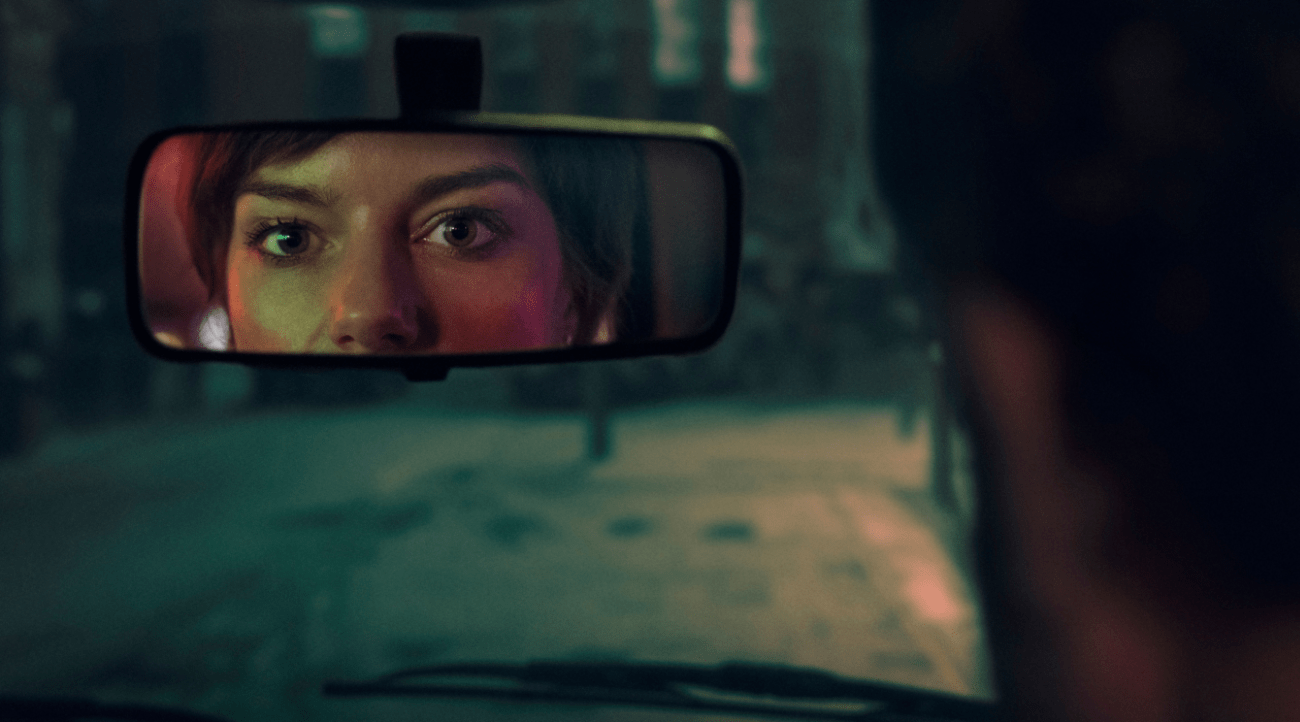
If you wonder where the title of new ITV drama Believe Me comes from, you just need to know this: the four-part drama, written and executive produced by Jeff Pope (Philomena, Stan & Ollie, Cilla) and premiering on Sunday, May 10, tells the harrowing story of two women, portrayed by Aimée-Ffion Edwards (Slow Horses, Peaky Blinders, Mr Burton) and Aasiya Shah (Raised by Wolves, Bloods, The Beast Must Die), who reported assaults by a taxi driver. That driver turned out to be “one of the most prolific sex attackers in British history,” but the women “were failed by the system,” specifically London’s Metropolitan Police, or Scotland Yard.
The women suffered the indignity of multiple interviews, intimate evidence gathering and skeptical lines of questioning from the police, among other things. Miriam Petche (Industry) also features in the series as a woman who got away, but is also struggling with the aftermath of an encounter with the driver.
Daniel Mays (Line of Duty, Des, A Thousand Blows, Moonflower Murders) plays the attacker, John Worboys, who became known in the U.K. as the “Black Cab Rapist.” His modus operandi was to pick up women in his cab after they had been on a night out, claim that he had won at a casino or in the lottery, and persistently offer them a drug-laced glass of champagne to help him “celebrate” – which rendered his victims unconscious.
Julia Ford directed Believe Me, produced by Pope’s Etta Pictures, part of ITV Studios. The drama, filmed in Cardiff with the support of the Welsh government via Creative Wales, was produced in association with, and is distributed by, ITV Studios.
The female stars of the series shared, in a chat with THR, what it was like to portray two victims, Sarah (Edwards) and Laila (Shah), whose real names aren’t used, with the show instead using pseudonyms and changing elements of their stories to protect their anonymity.
“What’s so amazing about Jeff’s writing is that the layers are already there, and he’s so brilliant at writing scenes that feel really relatable and really human,” Edwards told THR. “I feel every scene in this script is really important. It doesn’t matter how simple it feels, but it provides the opportunity to give a little bit more of a character.”
The actress also shared that “we were really lucky to get to talk to the real Sarah and hear her side and listen to her talk about her experience, which helped with layering up all that stuff. But a lot of the acting is instinct.” Edwards explained that the role gave her a chance to dive into the complexity of all sorts of intense emotions overlapping. “We can feel anger and despair and vulnerability and all those things at the same time,” she explained. “And I think that having the opportunity to show that nuanced experience is really important.”

Shah also recalled having “a long Zoom with the real Sarah, and I just said from the beginning, ‘Just talk, I’ll let you lead this. Share whatever you want to share.’ And she was so generous. She shared so much and went into so much detail, and I was able to track her experience over time, and that was such a gift.”
Shah told THR that the exchange took place “quite early on in my prep process, and I felt like it just set me off on the right path and grounded me in the real experience of not only a survivor, but one of the key people that our story is based around.”
Petche discussed how she got into her character, who had a different experience with Worboys. “You want to tell the story to the best of your ability with what’s given in the script and with no what was presented,” she said.
“It was about her having a narrow escape, believing that her drink was spiked, but that she wasn’t assaulted,” Petche told THR. “And I feel very lucky that in the writing, there were all these layers and complexities of figuring out this huge behemoth of a thing at such a young age, which a lot of these women had to go through. That’s a very complex thing that takes time.”
How did Pope make sure to do justice to the female characters in Believe Me? “I was very aware [that I was] a man telling the story of essentially these three women,” he shared with THR. “But because I started out my career as a journalist, the process has been the same for me all the way through, which is about finding out as much as you possibly can about a story and then telling it with a beginning, a middle and an end. What I realized very quickly here was that this is a story from their point of view.”
That affected his writing focus. “That meant that we see very little of the actual assaults, but focus on the impact they had on them,” Pope highlighted. “It’s not some kind of horror film with noir images of Worboys doing stuff. Instead, we mostly learn about what happened to the women as they do because they woke up and didn’t know much.”
The writer made sure to get all sorts of female input. “I spent a lot of time talking to women in my life – my wife, my sister and women friends,” Pope said. “But we were very lucky that the real Sarah spent time with us. I was able to speak to the real Laila as well. I treasured the time I spent with them, and both women were very open about everything.”
[SPOILER WARNING: This paragraph mentions details of an interaction between one victim and the police that is shown in Believe Me.] One scene in Believe Me, in which a police officer asks Laila about her red nail polish, is likely to be as upsetting for many viewers as it was for them, Pope and Shah said. And Pope didn’t make up that interaction. “Some of the questions the victims were asked were ridiculous,” Shah said. “When Laila is asked, ‘Would you consider yourself the type of woman who wears red nail varnish,’ she said: ‘What does that have got to do with anything?’” Explained Pope: “We didn’t have to embroider anything.” And he shared that his feeling was that “you almost have to pause the television” in shock.

Daniel Mays in ITV drama ‘Believe Me’
Courtesy of ITV
What are the creatives’ hopes for Believe Me and its impact? “I let the audience make their mind up,” Pope said. “Some stuff, I think, is genuinely shocking and makes you realize what women who experience and suffer from sexual assault or rape have to go through. It’s exhausting, emotionally and physically.”
Pope’s takeaway: “Systemically, there’s a problem with how the police investigate these crimes, because their guidelines say that the starting point should be that women should be believed. Well, the point is that they weren’t believed. It was the exact opposite. … The most damning indictment is that the real Sarah and the real Laila both said afterwards that the way they were treated by the police was worse than the assault. That has partly to do with the fact that they don’t remember much. But when they regained consciousness, they were aware of stuff, but the way the police treated them felt worse.”
For Shah, one lesson from Believe Me is simple. “We should be looking after each other. One of the biggest things that I felt was that there was a lack of care, just basic care and empathy for people who have had the courage to come forward and say what they had experienced. They were not shown basic empathy, which shines a [spotlight] on systemic problems. I feel, just on a human level, it’s really beyond disappointing how the women in this story, but also so many women in general, are treated when they come forward.”
Added Petche: “You would hope that there is change and progression. That’s why stories like these are so important, because maybe we haven’t progressed as much as we would like to imagine. So stories like these are, unfortunately, very relevant, and they will continue to be. So these stories need to be told and be told again and again, so we can analyze what happened and why it happened, and how we can prevent it from happening again.”
Pope echoed that. “I think 50 percent of the audience will not be as shocked as the other 50 percent because I don’t think men have had proper insight,” he offered. “I certainly didn’t when I began the research and writing process. I didn’t have a proper insight into how walking home from the train station can be an ordeal when you go out for a night with your friends – stuff that you wouldn’t even think about twice as a man. And then the way that the system treated these women was shocking for me. I think women will be angry, but the really terrifying thing is that they won’t be shocked.”
Edwards also shared her hope for the impact Believe Me could have and the debates it could encourage. “It’s so easy to become really complacent,” she told THR. “When something happens, it’s in the press, people talk about it for a while, and then it disappears, and we all get on with our lives. But there are still victims sitting in silence, unseen, and we’re not really progressing to stop these things from happening. So, if having a show like this sparks conversation, if it makes people angry, because people respond to anger in a more effective way, then that’s really important.”
Concluded Edwards: “These women have spent so long not being heard and seen, and if we can make them feel seen and heard, then that is really nice and important.”

