


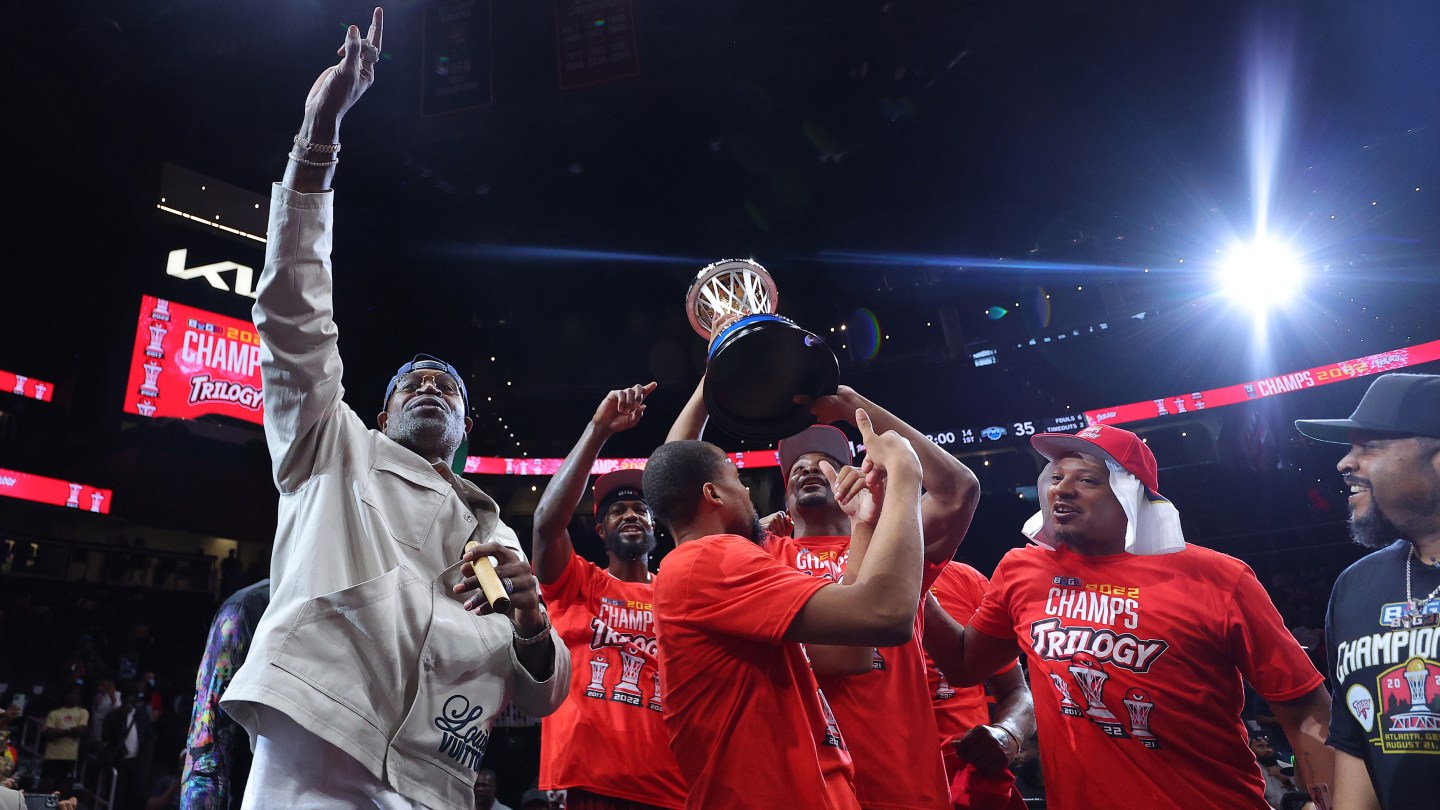
When Ice Cube launched the BIG3 in 2017, he framed it as “changing the game.”
The three-on-three basketball league was meant to be a fast-paced complement to the NBA, giving emerging players a chance to shine, and to fill a mostly empty summer sports calendar in the process.
The league, which has a media rights deals with CBS and Fubo, ended up being a survivor: The rare startup sports league that has survived, not only COVID, which stressed the major leagues to their limits, but also a media environment where breaking through is challenging at best, impossible at worst.
“The vast, vast majority of leagues fail. I think since we started, it’s been over 100 leagues that have started and failed,” says Jeff Kwatinetz, who co-founded BIG3 with Cube. “I think the most important achievement is that the fans and the players love our sport, and it’s accepted as a real professional sport, and viewed as something that is worth people being fans of. It can’t be underestimated.
“Look at LIV [LIV golf] as an extreme example, in dollars, they couldn’t get people to really care about the sport. They had 150,000, 200,000 people watching the matches,” he adds. “We have 600,000 people watching. Ultimately, you could market to the fans, but if they don’t accept the sport and care about it, then you’re kind of dead in the water.”
BIG3 now plans to leverage those fans, which are still modest in size compared to the largest sports leagues in the world, to help get it to the next level. The company is set to go public in the coming months via a SPAC merger, valuing the league at about $290 million.
“Cube always says ‘changing the game,’ and I think that there is a lot of demand for people wanting to be involved in the sports sector,” Kwatinetz says. “There’s just not a lot of opportunities for a regular investor to be able to invest in sport unless you’re a billionaire and you could afford to buy an NFL or an NHL team. It’s very hard to get access to it.
“We want people to kind of be part of the league, the growth, and to feel part of it in the same way that people, when they gamble on games, they tend to watch them more,” he adds, noting that getting buy-in from investors could turn them into fans. We believe if retail investors are able to invest or even hear about investing in the league, it gives them something else to root for, and gives them a feeling that they’re part of the league, which they would be. So we think it’s a better way of going and funding the league rather than continuously doing private rounds.”
So what will BIG3 do with that cash? As with any sports league, it will be in pursuit of revenue growth. In this case, it is about adding more teams and more games, which can ultimately lead to higher media rights
“The NHL has many, many more times inventory than we have, which is more valuable to the media partners and more valuable to the sponsors because they deliver a massive cumulative audience, so I think in terms of media that’s where we have to get,” Kwatinetz says. “Part of why we’re doing the IPO is to be able to finance doing more games, more teams, so there’s more inventory.
Longer-term, Cube and Kwatinetz want to have a league that stands on its own, with a thriving fanbase that media operators will want to fight over.
“If you look at the most successful leagues, the NFL, NBA, NHL, MLS, even WNBA, I mean, they’ve been around for decades,” Kwatinetz says. “Nine years seems like a very long time to Cube and I because we’ve been working on it every day of our lives for the last 10 years, but to the sports industry, we’re still closer to neophytes than we are to long-term leagues.”

