


Japanese genre maven Kiyoshi Kurosawa is mostly known outside his homeland for eerie, visually inventive films like Cure, Pulse and Loft that brought the J-horror trend into the arthouse. But he’s also made psychological thrillers (Creepy), serial killer flicks (Serpent’s Path), science-fiction movies (Before We Vanish), a darkly comic anti-capitalist actioner (last year’s Cloud) and at least one great drama (Tokyo Sonata).
The auteur can now cross another genre off his bucket list with The Samurai and the Prisoner (Kokurojo), a stately and rather stagy historical mystery set during the 16th century, at a time when warring clans fought and outmaneuvered each other for control of the land.
Kiyoshi Kurosawa
The Bottom Line
Katanas Out.
Venue: Cannes Film Festival (Cannes Première)
Cast: Masahiro Motoki, Masaki Suda, Yuriko Yoshitaka, Munetaka Aoki, Bando Shingo
Director, screenwriter: Kiyoshi Kurosawa, based on the book by Honobu Yonezawa
2 hours 27 minutes
Based on the prizewinning 2021 novel by Honobu Yonezawa, the film tells a story that will probably be familiar to anyone who grew up in Japan. It then takes that classic narrative and adds a few new twists, as well as a decidedly anti-war message that seems to be speaking to our time as well.
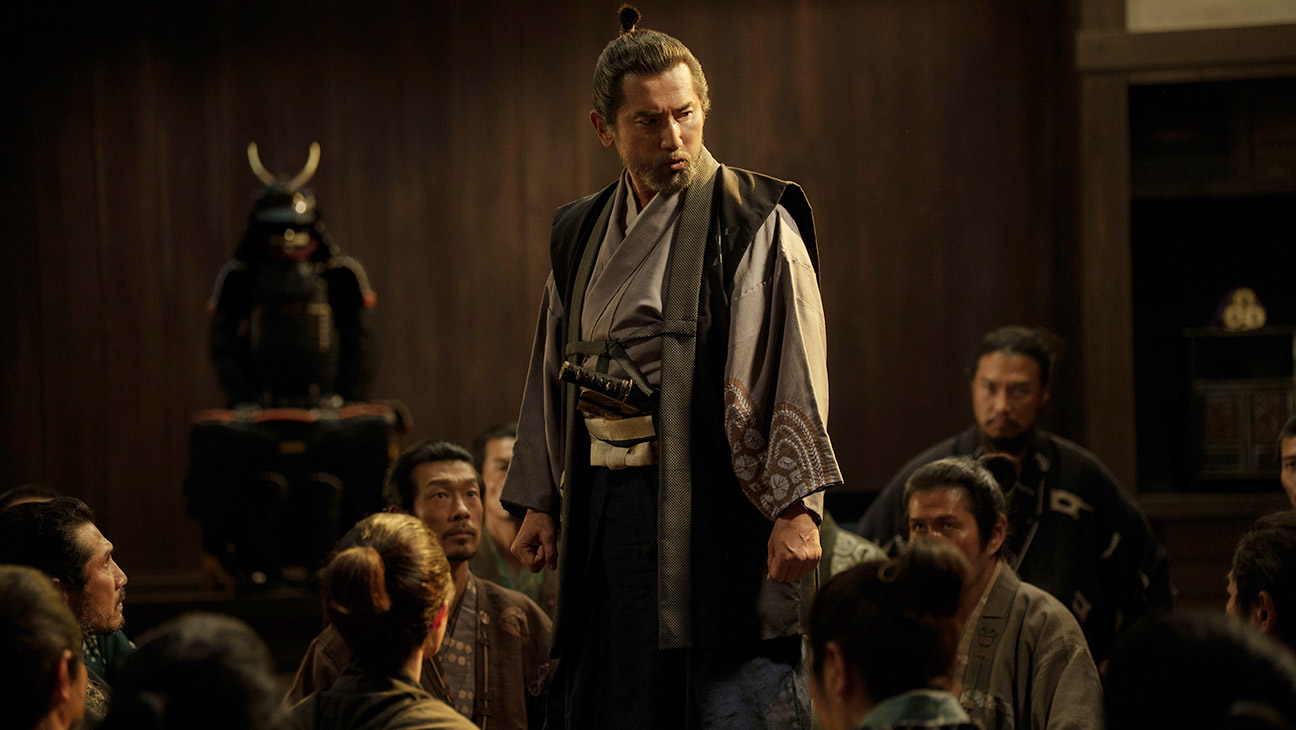
The tale of Lord Murashige Araki (Masahiro Motoki), who betrayed the infamous samurai leader and “great unifier” of Japan, Nobunaga Oda (Bando Shingo), is usually depicted as one of treachery and cowardice: an ambitious underling breaks ties with his powerful boss, holes up in his own castle surrounded by a small but faithful army, then eventually decides to abandon ship.
Kurosawa, who adapted the screenplay himself, transforms Murashige’s long last stand into four interconnected mysteries each spanning a single season. Not unlike an Agatha Christie whodunit, but featuring katanas instead of poison and revolvers, the stories all depict a seemingly impossible crime Murashige has to somehow solve. Unable to do that on his own, he enlists the help of Kanbei Kuroda (Masaki Suda), a faithful Nobunaga lieutenant who’s been taken prisoner in the castle and offers to serve as a Watson to Murashige’s Sherlock, even if the detainee is not to be trusted.
This sounds like the perfect set-up for a suspenseful feudal thriller — think Knives Out meets Throne of Blood — in which Kurosawa (no relation to Akira) could showcase his talent for capturing violence and madness, this time within the elegant medieval sets designed by Harada Tetsuo (The Last Ronin). But the director more or less opts to eschew violence altogether, delivering a loquacious and theatrical drama that’s more traditionally made than probably anything he’s directed up until now. Even when there is a bit of action thrown in, it’s rather short and bloodless — more suggestive than visceral.
In some ways this makes sense: The whole reason Murashige thwarts Nobunaga in the first place is because he rejects his leader’s brutal ways, as evidenced during a flashback in which he’s obliged to decapitate a bunch of innocent women. (Okay, so there are some beheadings here, but even those look rather clean.) Unlike most samurais of his time, Murashige is thoughtful, erudite and believes violence is never the answer — a philosophy that comes back to haunt him, especially in the final act.
The director’s sober if mastered approach to such material doesn’t necessarily tantalize the viewer, although Japanese audiences familiar with the characters and stakes may be sucked in more easily. One problem is that Kurosawa winds up repeating the same scenario each time, even if the crimes, victims and culprits are all different: After investigating for a while on his own, Murashige confides in his wife, Chiyoho (Yuriko Yoshitaka), who turns out to be less innocent than she initially appeared. Then he heads down to the dungeon for a long chat with Kanbei, who sifts through piles of calligraphy scrolls like a detective mulling over evidence files, offering up an hypothesis as to what really happened.
Not that there’s a lack of intrigue here, but anyone expecting that a film called The Samurai and the Prisoner would be filled with chopsocky action scenes will be disappointed. Kurosawa has instead chosen to direct a refined murder mystery dressed up in sumptuous feudal garb, offering his own take on one of the oldest Japanese genres. More than that, he’s made a work that questions the kind of violence that has characterized most of his cinema, celebrating a legendary character who decided to walk away from war rather than waging it. Classic and contained (the action rarely ventures outside the castle), this is a samurai flick that ends up denouncing the sacred code all samurais used to live by.

