



The Saturn return is one of the most defining cycles in astrology. It occurs roughly every 29 to 30 years, when Saturn returns to the exact position it occupied at the time of your birth. This is not a gentle transit. It is a period of reckoning, restructuring, and maturity. Saturn does not hand out rewards easily. It tests and strips away what is superficial, demanding that you confront reality as it is.
Most people experience three Saturn returns in a lifetime. The first, around the age of 28 to 30, marks the transition from youth to maturity. The second, around 58 to 60, is about legacy, reinvention, and consolidation. A third, if one reaches it, is more introspective, often tied to meaning and closure. During these phases, life tends to narrow down to essentials. Careers are questioned. Relationships are tested. Long-standing patterns that no longer serve a purpose are dismantled. There is often pressure, delays, and a sense that things are not moving easily. Yet this is precisely how Saturn works. It is not here to block you. It is here to build something that can endure.
In Bollywood, where careers can rise and fall with astonishing speed, the Saturn return often coincides with defining turning points. Some stars become superstars. Some reinvent themselves. Some stage remarkable comebacks. Others struggle to adapt to changing realities.
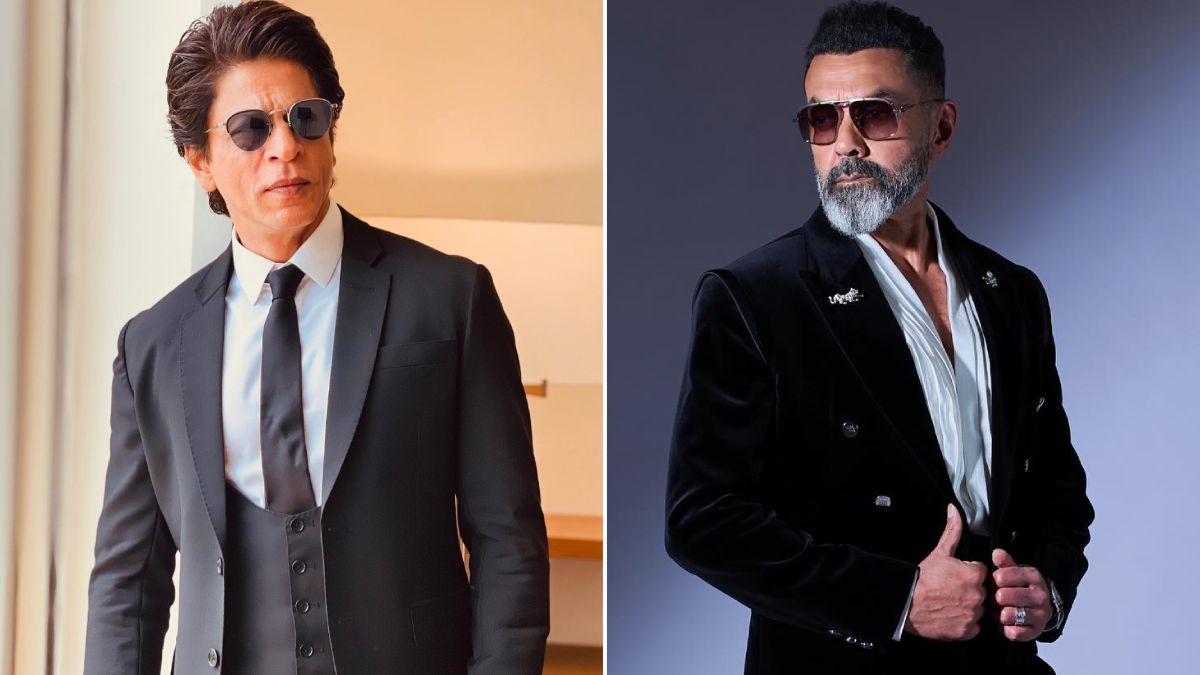
In Bollywood, where careers can rise and fall with astonishing speed, the Saturn return often coincides with defining turning points. Some stars become superstars. Some reinvent themselves. Some stage remarkable comebacks. Others struggle to adapt to changing realities. The stories of Shah Rukh Khan, Amitabh Bachchan, Dilip Kumar, Bobby Deol, Rishi Kapoor, Rajesh Khanna, Yash Chopra, Raj Kapoor, and Aamir Khan offer fascinating examples.
Shah Rukh Khan
The first Saturn return of Shah Rukh Khan, between 1993 and 1995, coincided with a dramatic transformation. At the time, he was a newcomer in Bollywood, having moved from television. Instead of playing it safe, he took on unconventional, and in some cases negative, roles in Baazigar (1993) and Darr (1993). These were bold decisions for an actor trying to establish himself, and they carried considerable risk. That phase culminated in Dilwale Dulhania Le Jayenge (1995), which transformed him into a superstar and a romantic icon.
This period started a golden run for Shah Rukh Khan. Over the next two decades, he led several blockbuster films and remained one of the most dominant forces at the box office, with successes such as Kuch Kuch Hota Hai (1998), Kabhi Khushi Kabhie Gham (2001), Chennai Express (2013), and Happy New Year (2014).
After this phase, a difficult period followed. Although Raees (2017) performed well commercially, several of his other films underperformed, including Fan (2016), Jab Harry Met Sejal (2017), and Zero (2018). The media began writing him off. Some of his long-time collaborators were hesitant to start big-budget films with him. After Zero (2018) failed, he took a break from acting.
His next Saturn return coincided with his comeback in 2023, and the turnaround was remarkable. More than a year before the release of Pathaan (2023), I had publicly predicted, astrologically, that Shah Rukh Khan was approaching a major comeback phase. At the time, this was a contrarian view. He had been away from the screen for several years, and many commentators believed his best years were behind him. The success of Pathaan (2023), Jawan (2023), and Dunki (2023) subsequently validated that assessment. He reevaluated his choice of films, adapted to changing audience expectations, and staged a powerful comeback at a time when many had written him off.
Shah Rukh Khan also reinvented himself physically, returning in exceptional shape and demonstrating the same willingness to evolve that had characterized his earlier rise. He continues to be one of the most sought-after actors in India and one of the country’s biggest brands.
Amitabh Bachchan
The career of Amitabh Bachchan offers an equally compelling illustration of Saturn’s influence. Few careers illustrate the power of reinvention better than that of Amitabh Bachchan, who has navigated two Saturn returns during a career spanning more than five decades. Around his first Saturn return in the early 1970s, Zanjeer (1973) was released on May 11, 1973. It is likely that the process leading up to this, including being offered the film and deciding to reinvent himself as an actor, took place in the years just before the release, during the build-up to his Saturn return.
Until then, after appearing in about a dozen films, many of which did not work at the box office, he had struggled to establish himself as a leading man. Zanjeer (1973) was a major turning point. It marked a decisive shift in his image and began a journey that would make him arguably India’s biggest-ever film star.
His next Saturn return came around the year 2000, a period that presented a very different set of challenges. His company, ABCL, had collapsed; he was facing financial strain, and his films were not doing well. He had debts to pay. Around this time, Kaun Banega Crorepati premiered on national television.
It took Amitabh Bachchan some time to agree to come on board. At the time, it was widely perceived as a comedown for a legendary film star to host a television game show. However, he was compelled by circumstances to take that step. What followed changed not only his career but also the landscape of Indian television. His stature did not diminish. If anything, television in India became bigger because of him. The show became a cultural phenomenon, revived his career, and connected him with a new generation of viewers.
A few months later, in October 2000, came Mohabbatein (2000), in which he played a pivotal role alongside Shah Rukh Khan. His willingness to step back and allow Shah Rukh Khan to play the lead was another example of adaptability. It marked the beginning of a new innings in his career, one that elevated his stature further and introduced him to audiences who had not witnessed his earlier peak. What followed was a second phase defined by strong, character-driven roles in films such as Black (2005), Paa (2009), Piku (2015), and Pink (2016), reinforcing his longevity and relevance.
Bobby Deol
Bobby Deol’s career offers another striking example of how a Saturn return can coincide with a dramatic change in professional fortunes. After emerging as one of Bollywood’s most popular young stars in the late 1990s through films such as Barsaat (1995), Gupt (1997), Soldier (1998), and Badal (2000), Bobby Deol entered a prolonged period of decline. A series of films failed at the box office, opportunities became fewer, and he gradually moved away from the center of Bollywood’s conversation. In later interviews, he spoke openly about the difficult years that followed, including his struggle with alcohol and the disappointment of watching his career lose momentum.
For a considerable period, Bobby Deol appeared to have been written off by the industry. Although projects such as the Yamla Pagla Deewana franchise and the web series Aashram helped restore some visibility, he was no longer viewed as one of Bollywood’s most sought-after actors.
Animal (2023) was released just before Saturn returned to its natal position. It is unlikely that Bobby Deol signed the film from a position of strength. Rather, the project came after years spent navigating one of the most difficult phases of his professional life. His portrayal of Abrar Haque, despite limited screen time, became one of the most talked-about aspects of the film. Audiences responded strongly to his screen presence, physical transformation, and intensity.
What followed was even more significant. As his Saturn return began, Bobby Deol suddenly became one of the most sought-after actors in the industry. Producers from Hindi and South Indian cinema, as well as from streaming platforms, lined up to work with him, and he found himself attached to some of the biggest projects in development.
The turnaround was remarkable because it did not merely revive his career. It transformed the industry’s view of him. For years, he had struggled to secure meaningful roles. Following Animal, filmmakers began approaching him for major projects across multiple industries. After a long period in the wilderness, Bobby Deol had re-established himself as a powerful screen presence and one of the most in-demand actors in Indian entertainment.
Rishi Kapoor
The second Saturn return of Rishi Kapoor coincided with a remarkable reinvention. For much of the 1970s and 1980s, Rishi Kapoor had been one of Hindi cinema’s most successful romantic heroes. However, by the late 1990s, his career had entered a steady decline. Audience tastes had changed, younger stars had emerged, and the style of films that had made him famous was no longer dominant. His directorial venture Aa Ab Laut Chalen (1999) failed to find favor with audiences, and films such as Karobaar (2000) did little to reverse the slide.
His reinvention began with Hum Tum (2004), where he successfully transitioned into character roles. Yet it was during his second Saturn return that this transformation reached its peak. Films such as Do Dooni Chaar (2010) and Agneepath (2012) revealed entirely new dimensions of his talent. In Do Dooni Chaar, he won acclaim for his portrayal of a middle-class Delhi schoolteacher struggling to provide a better life for his family. In Agneepath, he shocked audiences with a chilling negative role that bore little resemblance to the romantic image that had defined him for decades. The success of these films transformed how the industry viewed him.
Rishi Kapoor was no longer remembered merely as a former star from another era. He had become one of Bollywood’s most respected and sought-after character actors. The years that followed produced memorable performances in films such as D-Day (2013), Kapoor & Sons (2016), Mulk (2018), and 102 Not Out (2018), cementing a second innings that many regarded as every bit as impressive as his first.
Yash Chopra
The experience of filmmaker Yash Chopra demonstrates that Saturn returns can be significant not only for actors but also for creative visionaries. By the early 1990s, Yash Chopra was already regarded as one of India’s most accomplished directors. Yet he encountered a major setback when Lamhe (1991) failed commercially. Although many critics regarded it as one of his finest works, audiences at the time rejected its unconventional storyline. The film’s central theme – involving a man falling in love with the daughter of a woman he had once loved – proved too unconventional for much of the audience of that era. For a filmmaker with his stature, the failure was a serious disappointment.
During his Saturn return, Yash Chopra responded by reinventing himself creatively. Instead of making another soft romantic drama in the mold of Chandni (1989) or Lamhe (1991), he produced and directed Darr (1993), an intense love story built around obsession, fear, and emotional volatility. The film was conceived and produced entirely during his Saturn return and represented a significant departure from the style with which he had become synonymous.
The gamble paid off spectacularly. Darr became one of the defining films of the decade, re-established Yash Chopra as one of Bollywood’s most relevant filmmakers, and played a major role in elevating Shah Rukh Khan to a new level of stardom.
The momentum generated during this period continued. Two years later came Dilwale Dulhania Le Jayenge (1995), directed by his son, Aditya Chopra, and produced under the Yash Raj Films banner. The film became an all-time blockbuster and one of the most influential films in the history of Indian cinema. In one interview, Yash Chopra recalled asking Aditya what he would like to do with the money earned from the film. Aditya replied that he had a dream of building a studio of his own. The family subsequently acquired a large plot of land and built Yash Raj Studios, which has since grown into one of the most powerful and influential studios in Bollywood.
The achievement was particularly noteworthy because Bollywood history is filled with filmmakers who lose their ability to connect with younger audiences as they grow older. Success in Hindi cinema often depends upon understanding the aspirations, fears, and tastes of younger generations. Many directors struggle to adapt. Yash Chopra did the opposite. During his Saturn return, he changed course, reinvented his creative approach, and delivered one of the most successful phases of his career. What began as a creative reinvention ultimately extended far beyond a single film, helping to lay the foundations for an institution that would shape Hindi cinema for decades.
Raj Kapoor
A similar example can be found in the career of Bollywood’s legendary showman, Raj Kapoor. By the mid-1980s, Raj Kapoor had already spent decades shaping Indian cinema through films such as Awaara (1951), Shree 420 (1955), Sangam (1964), and Bobby (1973). Few filmmakers have exerted a comparable influence on Hindi cinema. He had already secured his place in film history.
Yet during his Saturn return, Raj Kapoor directed Ram Teri Ganga Maili (1985). The film became one of the biggest successes of his career and was also among the highest-grossing Hindi films of the 1980s. More importantly, it demonstrated that even after decades in the industry, he retained an extraordinary understanding of what resonated with audiences.
The film ultimately became his swan song as a director. Like Yash Chopra, Raj Kapoor demonstrated that creative renewal need not end with age. At a stage of life when many filmmakers struggle to remain relevant, he delivered a film that captivated audiences across the country and reaffirmed his standing as one of Indian cinema’s greatest storytellers. One of the recurring themes of a Saturn return is the need to embrace change. Those who adapt often emerge stronger. Those who cling to old identities frequently struggle.
Rajesh Khanna
Rajesh Khanna’s career provides an interesting contrast. Widely regarded as Hindi cinema’s first superstar, Rajesh Khanna dominated Bollywood in the late 1960s and early 1970s. His popularity was unprecedented. Fans reportedly wrote letters to him in blood, married his photographs, and gathered in large numbers outside his home. For a period, he was the undisputed king of Hindi cinema.
His Saturn return coincided with the arrival of a powerful new force in Bollywood: Amitabh Bachchan. Although Bachchan had made his debut in Saat Hindustani (1969), 1973 proved to be the defining year of his early career. The release of Zanjeer (1973) introduced audiences to the “angry young man” persona that would transform him into a superstar and change the direction of Hindi cinema.
The same year also saw Rajesh Khanna and Amitabh Bachchan share screen space in Namak Haraam (1973). While Rajesh Khanna remained the bigger star at the time, many critics and members of the industry felt that Bachchan’s performance signaled the arrival of a formidable new talent. The romantic hero who had dominated the previous era was gradually giving way to a more intense and rebellious screen presence.
A Saturn return often presents a choice: resist change or adapt to it. It demands humility, patience, perseverance, and a willingness to evolve. For Rajesh Khanna, this was a period that demanded reinvention. While he remained immensely popular and continued to deliver notable performances, he did not adapt to the changing mood of the era in the way Amitabh Bachchan did.
To his credit, Rajesh Khanna remained a major star for years afterward. Yet the balance of power had begun to shift. As the decade progressed, Amitabh Bachchan’s rise accelerated while Rajesh Khanna’s dominance gradually diminished. The crown passed from one superstar to another, marking one of Hindi cinema’s most significant transitions. Yet Rajesh Khanna was not the only superstar confronted by changing audience tastes during a Saturn return. Dilip Kumar faced a remarkably similar challenge but chose a very different path.
Dilip Kumar
The career of Dilip Kumar offers one of the clearest examples of how a Saturn return can reward adaptation and reinvention. Although Ram Aur Shyam (1967) was a major success, it proved to be one of the last great triumphs of Dilip Kumar’s career as a leading man. The years that followed were marked by a gradual decline. Aadmi (1968) and Sunghursh (1968) failed to meet expectations, while Gopi (1970) provided only a temporary revival. Thereafter, Dastaan (1972), Sagina (1974), and Bairaag (1976) all disappointed at the box office. By then, Hindi cinema had changed dramatically. Audience tastes had shifted towards a new generation of stars such as Rajesh Khanna, Amitabh Bachchan, Dharmendra, and Vinod Khanna. For an actor who had dominated the industry for more than two decades, this was unfamiliar territory.
Following the failure of Bairaag, Dilip Kumar stepped away from films, and many believed his days as a major box-office force were behind him. It was at this point, during his Saturn return, that Manoj Kumar cast him in Kranti (1981). Manoj Kumar himself was in peak creative form during this period, having delivered a string of major successes and established himself as one of the most influential filmmakers in the country. The role presented Dilip Kumar with an opportunity to redefine his place in an industry that had moved on from the era in which he had dominated as a leading man.
Rather than attempting to compete with younger stars for the same kinds of roles, he embraced a different path and successfully transitioned into character roles. In many ways, this reflected the essence of a Saturn return: acknowledging change, adapting to new circumstances, and building success on a different foundation. Kranti became one of the biggest hits of its era and launched a remarkable second innings for Dilip Kumar. By accepting change rather than resisting it, he successfully reinvented himself as one of Hindi cinema’s most respected and sought-after character actors. In that respect, his response to Saturn’s challenge differed markedly from that of Rajesh Khanna.
Aamir Khan
The professional journey of Aamir Khan unfolds in distinct phases, each reflecting the long shadow of Saturn, the ruler of his 10th house of career. Saturn’s slow orbit brings enduring effects. At times, it manifests as long spells of success. At others, as extended periods of difficulty. This duality is clearly mirrored in Aamir Khan’s career, with dramatic highs and lows often aligning with shifts in dasha cycles and Saturn transits. His meteoric rise began with Qayamat Se Qayamat Tak (1988), which turned him into an overnight sensation. His boyish charm drew comparisons with stars like Rajesh Khanna and Kumar Gaurav. OAers poured in, and in his early enthusiasm, he signed multiple projects. Many of these turned out to be miscalculations. Weak scripts led to a series of underwhelming films, and for a brief period, his career appeared to be losing direction. Some even began to write him off prematurely.
Redemption came with Dil (1990), co-starring Madhuri Dixit. The film struck a chord with audiences and delivered a strong box office success. Its timing coincided with the onset of his Venus dasha, a phase that would underpin his evolution into a more nuanced and respected actor. The momentum continued with Dil Hai Ki Manta Nahin (1991), followed by Jo Jeeta Wohi Sikandar (1992) and Hum Hain Rahi Pyar Ke (1993), which reaffirmed his position as a dependable leading man.
The year 1993 also marked his Saturn return, a pivotal moment that often triggers deep personal reassessment. True to form, Aamir Khan began to pivot. He moved away from formulaic roles and became far more selective, choosing scripts that resonated with him.
About Vikkramm Chandirramani
Vikkramm Chandirramani, an astrologer practicing since 2001, combines the principles of Vedic and Western astrology with his intuitive abilities to offer profound insights into the future. His official website is https://www.futurescopes.com.
For more such exclusive stories, stay tuned to Koimoi.
Follow Us: Facebook | Instagram | Twitter | YouTube | Google News
