


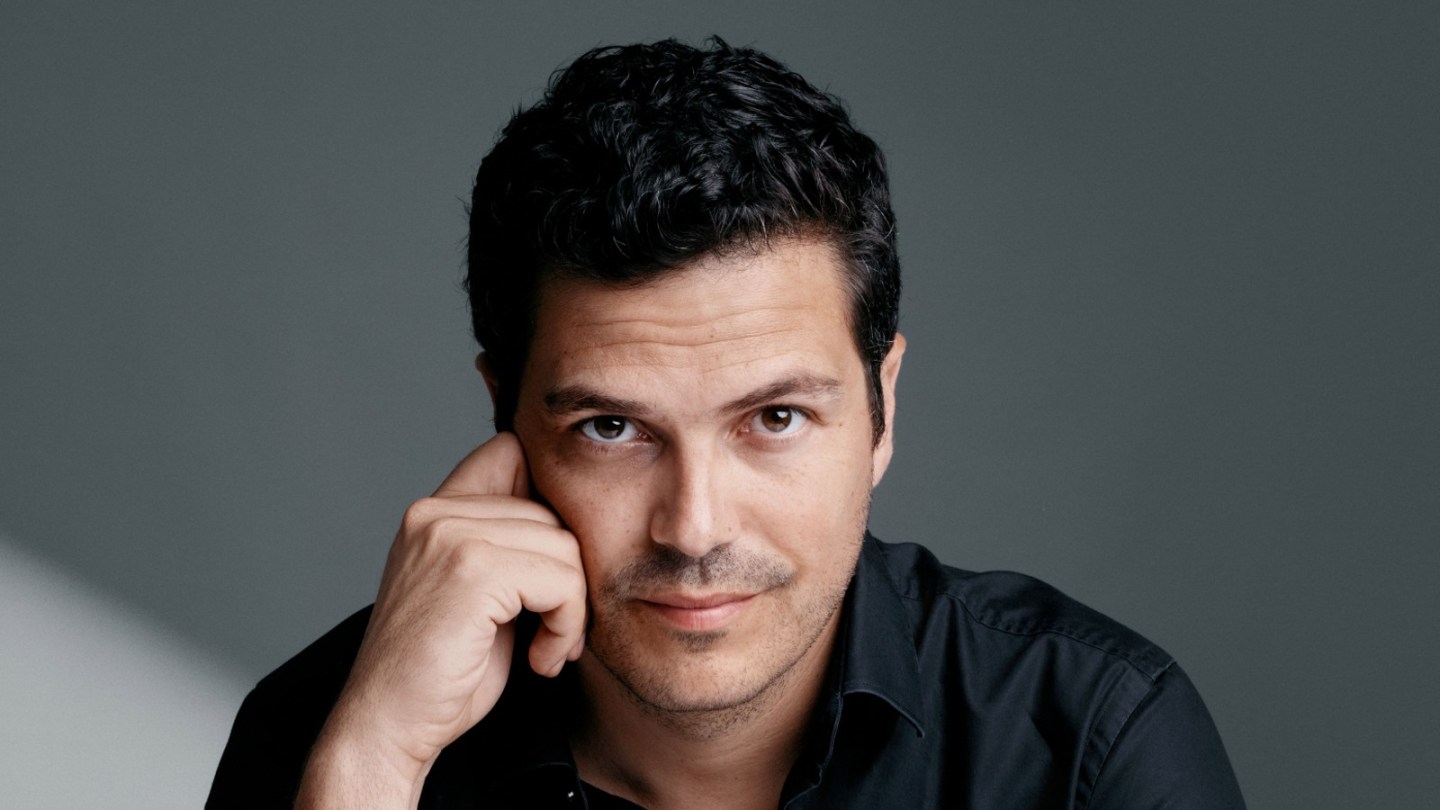
Jovan Marjanović is aware just how special the Sarajevo Film Festival is.
He would know, having worked for the Bosnian festival since he was just 19. Marjanović is 46 now, and comes into his fifth edition as the event’s sole director with buckets of confidence in what this fest has to offer European cinema.
Sarajevo is a film festival born out of war — its first edition, in 1995, took place while the city was still under siege — and that sense of resistance, of using film to empower communities, still sits at the heart of the festival today.
British actress Emily Watson has been tapped to head up the Sarajevo Film Festival jury this year, with the event running Aug. 14-21, alongside director of the European Film Academy Matthijs Wouter Knol, Yorgos Lanthimos’ producer Athina Rachel Tsangari, filmmaker Igor Bezinović and actress Sara Klimoska.
Watson will also receive the prestigious Honorary Heart of Sarajevo, also being presented to Asghar Farhadi, Diego Luna and Woody Harrelson at this installment. “Because it is an award tied to the city, it doesn’t have to be specifically about Sarajevo, but [about] representing similar values or understanding the world of cinema,” Marjanović tells The Hollywood Reporter about how the team selects their Honorary Heart recipients ahead of the 32nd edition.
The fest continues to spotlight a wealth of regional talent, including competition features from Zvonimir Jurić (Small Things), Urša Menart (Everything That’s Wrong With You), Kosara Mitić (17) and Dina Duma (Skateboarding Is Not For Girls). They’re still balancing that with a glitzier, Hollywood-skewed lineup that includes Paweł Pawlikowski’s Fatherland with Sandra Hüller (set to open the festival), as well as Luna’s Ashes and Andrey Zvyagintsev’s Cannes-premiering Minotaur. And, of course, the festival’s rich, cultural history will be honored with the closing-night film, a screening of the Oscar-winning, newly restored No Man’s Land, with Harrelson’s 1997 feature Welcome to Sarajevo also set to screen.
Below, Marjanović teases what’s to come from the 32nd Sarajevo Film Festival. He talks about the success of the Open Air Premiere Programs, why the CineLink industry lineup helps to underline the importance of Sarajevo’s place on the festival circuit, and the fascinating origin story that still looms large over everyone passionate about this festival: “[We] realized [the power of] communicating through culture and communicating through cinema with the outside world, because Sarajevo was so closed and besieged. That understanding is, I think, what makes this festival really important.”
Jovan, how long have you been in charge?
Well, I’ve been with the festival for a very long time. Since I was 19, and I’m 46 now. (Laughs.) So that’s been pretty much all my life. But I’ve been in charge for the past four years. This will be my fifth edition at the helm alone — there were another two editions before that as a co-director.
It’s safe to say you care a lot about this film festival.
Oh, absolutely! And I’m not alone. A lot of the team has been with the festival for a long time. But at the same time, we always have young people coming up through the ranks and taking over, and it’s been like that since the very beginning. It was always a close group of friends around the festival. We’re not an institutional body or government-owned body. We’re, let’s say, a non-profit based on an association of citizens. That’s the legal framework. So it’s really up to us, you know? We are our own, and it’s really important to have a group of people who care for what they do and have been nurturing it since day one.
[The Sarajevo Film Festival] really came from a difficult place. This festival came [during] war and siege and a complete lack of… everything — what Sarajevo went through in the ’90s. When I say everything, I mean food and electricity. It’s a really specific origin story for a festival, but then [we] realized [the power of] communicating through culture and communicating through cinema with the outside world, because Sarajevo was so closed and besieged. That understanding is, I think, what makes this festival really important.

Danis Tanović’s ‘No Man’s Land’
Everett Collection
How does the festival continue to honor the history of Sarajevo, the Bosnian War, through its programming?
I like to think that it’s in the DNA of the festival first and foremost. Somehow, you see things through that prism and understand the world through that prism and try to take important lessons. On the other side, this year there are two films that are coming back after a couple of decades [away from] the festival. We are closing with No Man’s Land. It’s been 25 years since we showed it last time, and it’s a Bosnian film that won the best international Oscar. But it really was a film that changed a lot of things [for] cinema in Bosnia, and put [the country] on the international stage. That’s the closing film of the festival with [director] Danis Tanović and the team in attendance, so I think it’s going to be very emotional.
There’s also Woody Harrelson, who is receiving the Honorary Heart of Sarajevo, and we wanted to show the film that he shot here. So we’re honoring him not just with the Heart, but with the screening of Michael Winterbottom’s Welcome to Sarajevo, a film actually shot back in 1996, just a year after the siege was lifted. Both films [Welcome to Sarajevo and No Man’s Land] are actually not present that much on streaming. They’re hard to find, for various reasons… Canal+ in France has restored No Man’s Land fully, so it’s an opportunity to screen the brand new, digital 4K restoration of that film. Welcome to Sarajevo, sadly, did not go through that restoration, but we’re going to screen it in 35mm, which has its own magic to it. Other than that, the festival has programs that are human rights-focused and focused on dealing with the past. The spirit of the festival is really in cooperation. Especially regional cooperation. It connects this legacy of war and division. I think the role of the festival was to build bridges between filmmakers.
Is that how you would describe the ethos of a festival like Sarajevo? These mid-tier festivals can have a really important cultural impact, especially in European cinema. What kind of conversations do you want to prompt?
It’s a festival that really has a reason to exist. But that’s not enough on its own. There needs to be a clear concept of the festival, and our concept has pretty quickly evolved around filmmakers from our region. We wanted to be geographically focused because of this turbulent history and because of the need to be a bridge between very specific territories [in] the Balkans. It’s a myriad of smaller countries with a lot of smaller languages, with a lot of history, but it’s a powerful mix in the end, and I think the festival serves as a common place for filmmakers and cinemas from many of these countries.
We’re also a big festival for the city and for the country, where people want to see the best of cinema from elsewhere — arthouse cinema, conversational pieces, and you want to see them as soon as possible. This is a showcase of the best films to come out this year up until now… And there’s no other festival in the world that shows more films from this part of the world than Sarajevo. You won’t see that many films from this part of the world in Berlin or in Cannes or in Venice. Then they have their home here in a way. We are a premier festival for films coming from this part of the world, and then there’s the whole industry side of things that’s also organized around [that], creating an ecosystem based around cinema from this region.
How do you balance those projects with the industry lineup? Some big stars come to Sarajevo, but it’s also a great networking opportunity.
True. And that’s one of the key things. It has grown organically, the CineLink Industry Days [program]. We started it some 25 years ago, so the festival and the industry section grew together in a way. The festival was always more audience-oriented. But then, when we introduced the competition sections, which are focused on regional cinema, suddenly those gained industry attention as well. So I think there is the question is of, as you said, balance — finding the equilibrium between the two. And I think once you have built an ecosystem that functions, then [one] feeds into the other. A lot of the execs who come here, they maybe have had films at the festival before, [or] they will have them in the future, and a lot of the projects that are at script stage will end up participating in CineLink to [try] fundraise and promote them. Some of them will go on and premiere elsewhere. Others will premiere with us. It’s a lot of meticulous work.
Those CineLink sessions are really wide-ranging…
The talks are great. Some speakers I’m really looking forward to hearing. Over the years, there’ve been so many different initiatives that then sprang out of these talks, which is another amazing thing. [They have been] directed either at gender equality or completely business[-focused]. It’s important to be a meeting point, and Sarajevo is really a meeting point. People feel that they can meet each other here. It’s kind of buzzing — the city is not too big, it’s not too small either. So there’s enough space. But at the same time, you can feel the festival everywhere in the city. This atmosphere, I think, adds to people being more open to exploring different futures. So the talks are inspirational in my view.
You have a really broad mix of Honorary Heart recipients this year. I’m curious to know how exactly you decide who to honor, and why it’s important to have some high-profile Hollywood names in the list.
Well, just looking at the list, there is a thread. The award is called the Heart of Sarajevo, and it really has to do with the city and embracing these people. Emily Watson has been coming to the festival for the past 25 years [or so]. Breaking the Waves was the film that won the second Sarajevo Film Festival before we had the regional focus. She won our hearts back then with that film. And then she kept coming back. She was here, pregnant with her daughter, and now she’s coming with her as a 20-something-year-old! So it’s pretty emotional to welcome her back, and she’s gonna head our jury and dive into the selection of films from this part of the world. She’s going to work fantastically with her fellow jurors.
Asghar Farhadi was head of the jury in Sarajevo a few years ago, and when you discuss films with someone like him, you build a connection and an understanding of how we see cinema, what he sees, what we like. That’s another strong bond. I’m saying this in addition to their careers, which are all exceptional. Diego Luna… The people from Mexican and Spanish cinema, from Gael García Bernal to Alfonso Cuarón. Alfonso was actually here for the first Sarajevo Film Festival ever, back in 1995. In the middle of the war, he came to show A Little Princess to the children of Sarajevo. And Y tu mamá también is maybe one of the films that defined the generation of the early 2000s, both for cinema-goers and people making films. Alfonso [is] the leader of that generation, with Diego and Gael… And I already told you about Woody Harrelson. He shot a film here back in 1996 and hasn’t been back since. It’s amazing to welcome him back.
So it’s important that these recipients have a special connection to Sarajevo?
Well, it just so happens [that way]. That’s not what we award. It really is about the respect for their work in cinema first and foremost. Because it is an award tied to the city, it doesn’t have to be specifically about Sarajevo, but [about] representing similar values or understanding the world of cinema. So we need to be close, maybe without ever meeting each other, but through work and worldviews and world values. That’s the key.
I know you can’t show any favoritism, but are there any projects you’re particularly excited about this year, maybe out of competition?
Yes. Last year, we opened a new section called Open Air Premieres. This has really grown quickly. We have it at a very prominent venue, a thousand-seater outdoor [theater] with a view of the beautiful Sarajevo City Hall. These films are [typically] something that was missing from the overall mix [or] more popular films from the region [such as No Good Men, Ashes, Minotaur]. Stuff that’s more audience-driven, that can communicate to a bigger crowd. We [also] gave [the Open Air Premiere selection] a new award this year, the Audience Award, that comes with about 20,000 euros in marketing through Cineplexx, so that’s really exciting. I hope the addition of more popular choices for audiences can complete this regional selection.
In our summer screen section, we have a lot of the best films of the year from Berlin, from Cannes, from last year’s Venice Film Festival. In both the Midnight Screenings and Kinoscope, there are a lot of new voices in cinema, a lot of genre-bending stuff. So I’m sure that a lot of the audience will drop in for that. We are opening with Fatherland from Paweł Pawlikowski and I think it’s going to be a great opening. It’s exactly the film that fits the profile of the festival. And No Man’s Land, as I said. There are great films in between that I’m really looking forward to: the Berlinale opener No Good Men, the Afghani film. I think it will resonate with the Bosnian audience very much. Palestine 36 from Annemarie Jacir, also something the audience will want and need to see. Then there’s Minotaur from Andrey Zvyagintsev, which carries a lot of weight in terms of what the story is, the corruption it depicts. I’m really looking forward to the entire Open Air program this year. It’s 3,500 seats and a huge screen and a really special place to see films.
The 2026 Sarajevo Film Festival runs Aug. 14-21.

